

Understanding Gases and
the Importance of Gas Detection
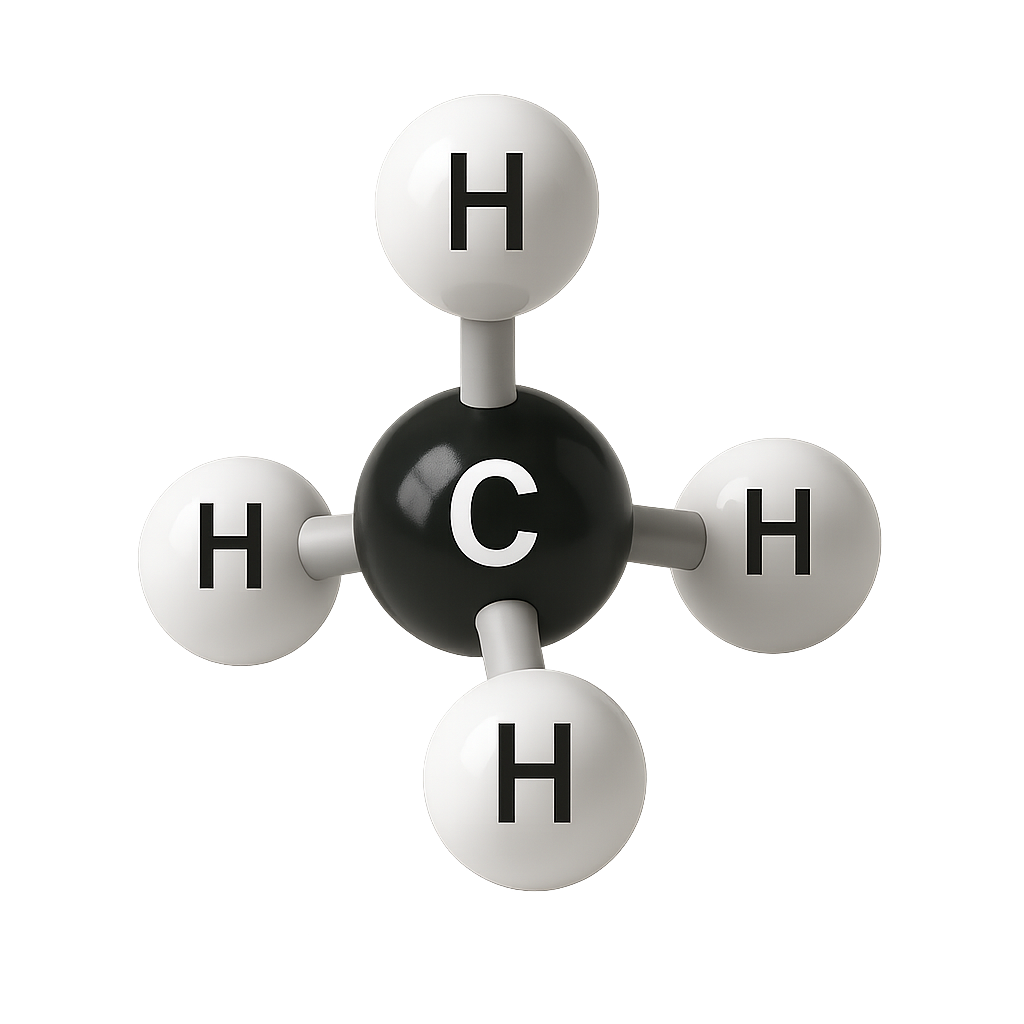
Methane
Methane is a combustible gas which constitutes the main component of widely used fuels such as natural gas and liquefied natural gas (LNG). This important gas is relevant not only to the energy and infrastructure sectors, but also a wide range of other industries due to environmental concerns.
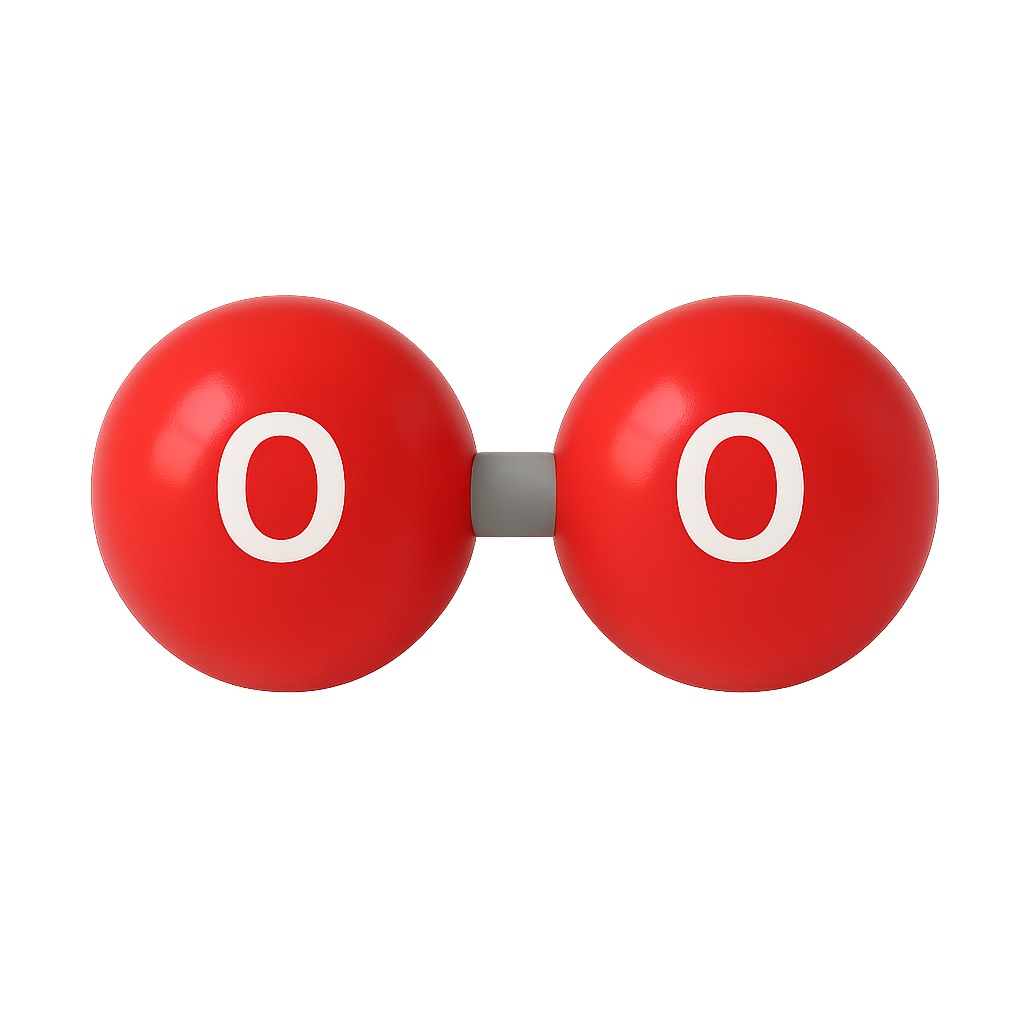
Oxygen
Carbon Monoxide
Hydrogen Sulfide
Hydrogen
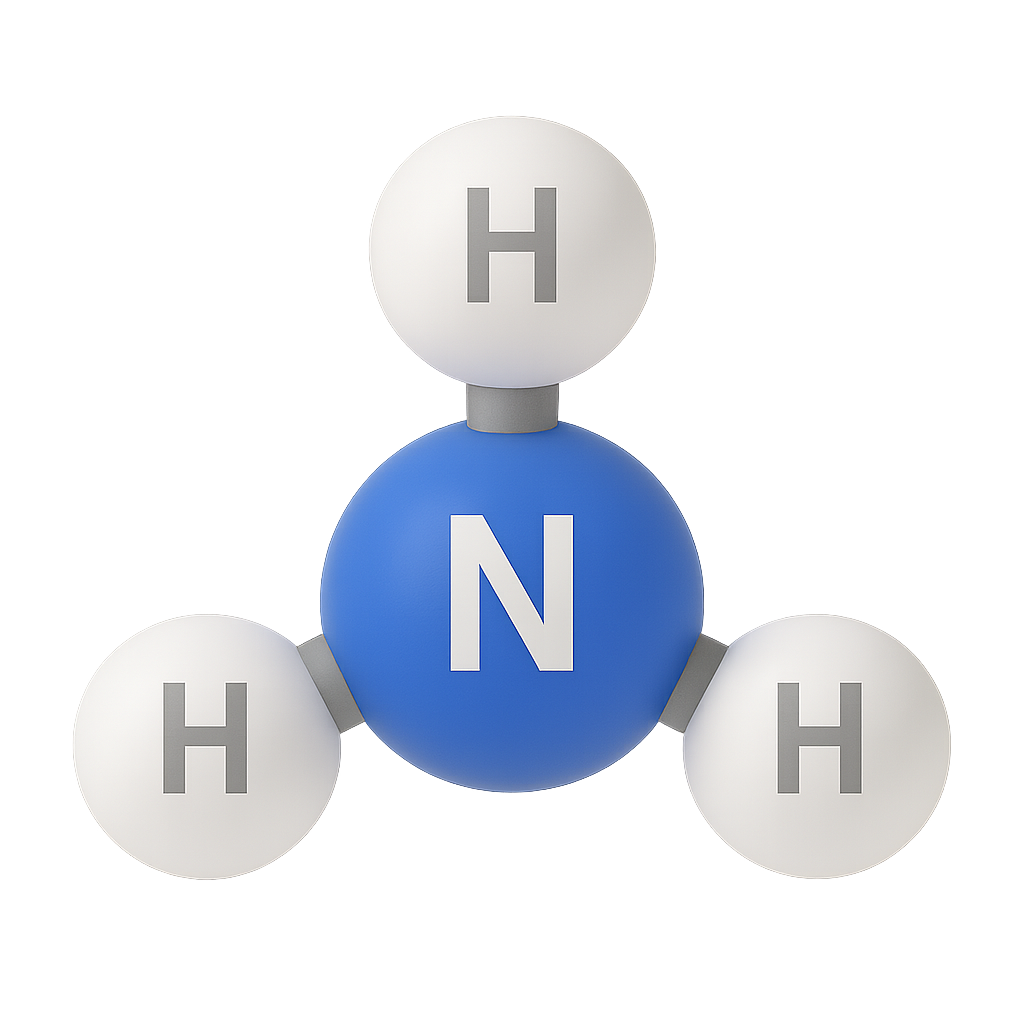
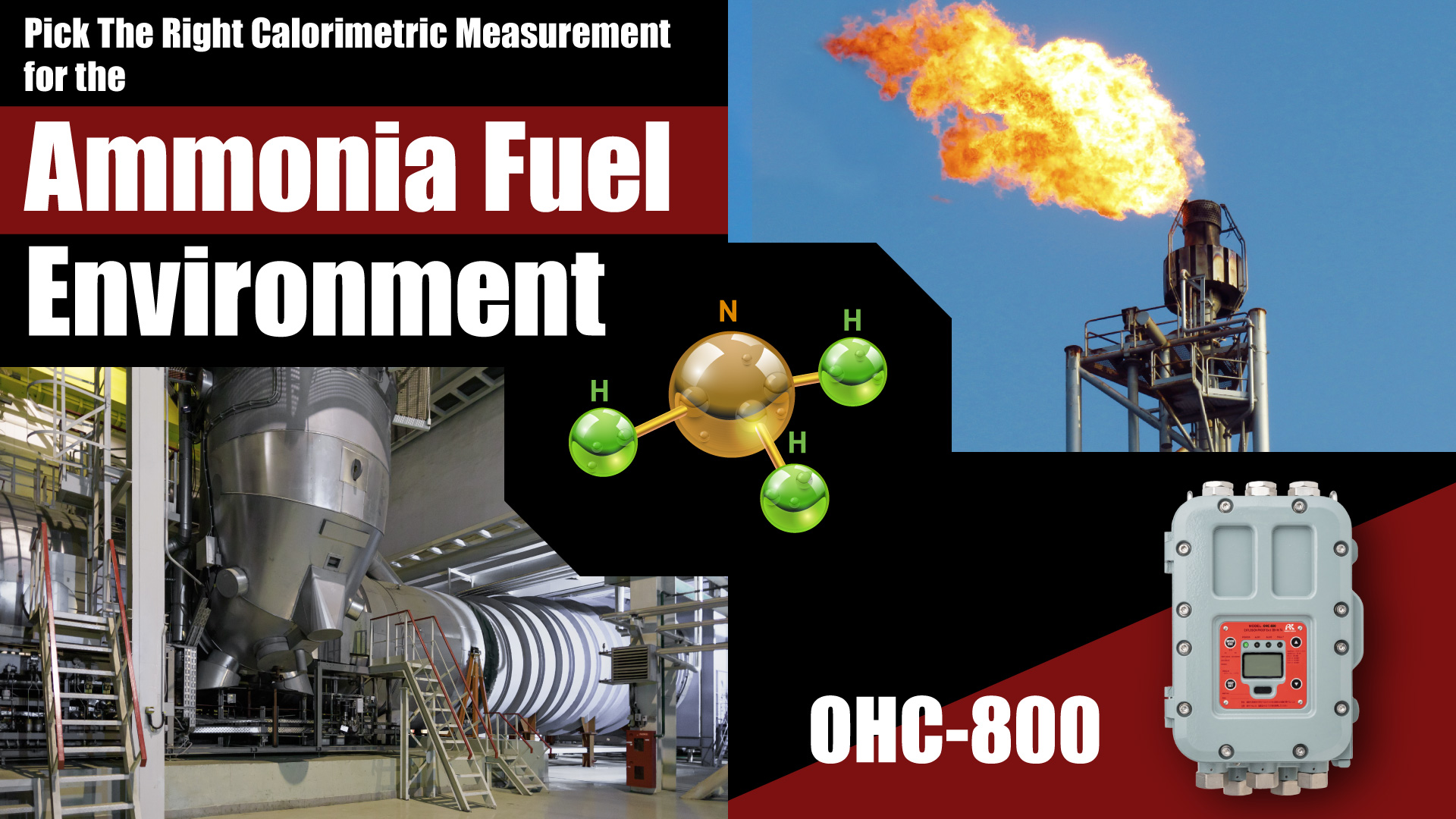
Ammonia
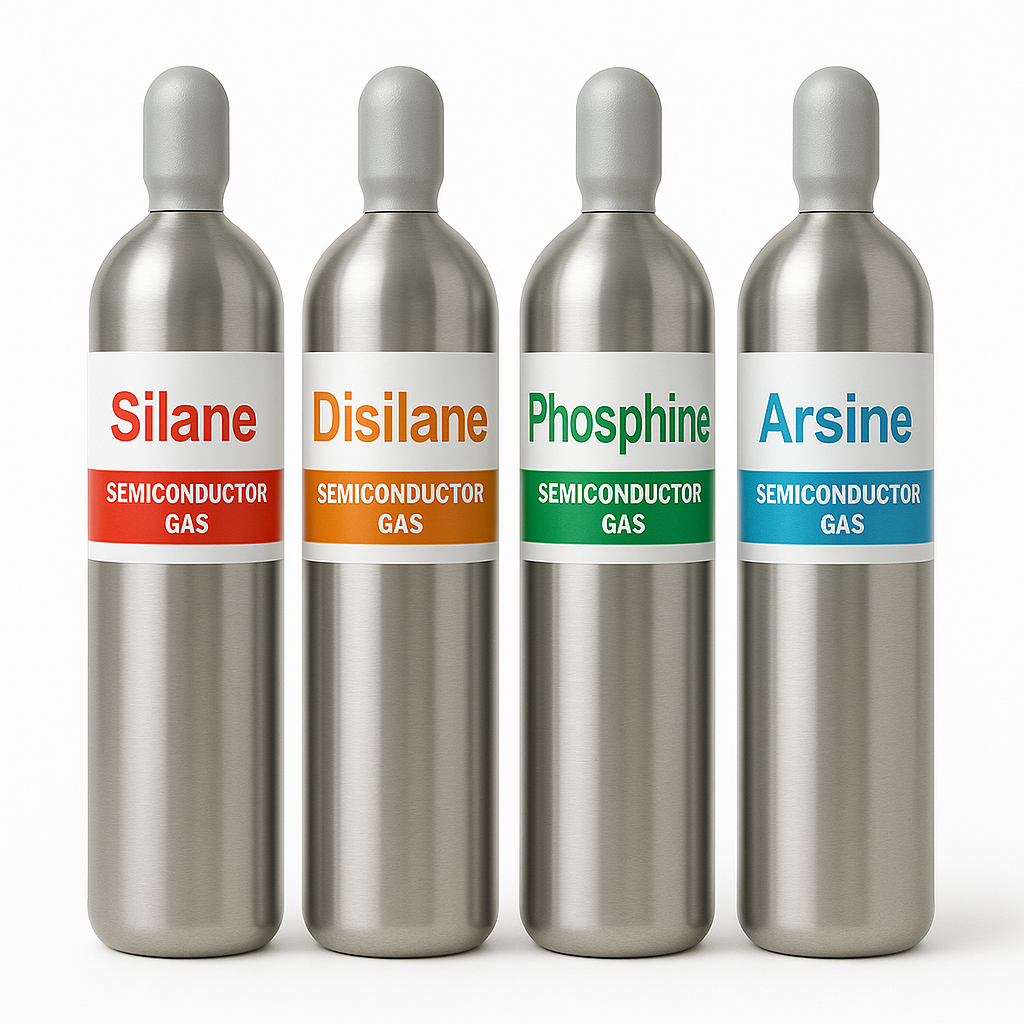
Special gases in semiconductor fab
=100%LEL
=100%LEL
Combustible gas list (e.g.)
| Gas name | Chemical formula | Flash point (°C) | Ignition temperature (°C) |
Explosion limit (vol%) | Specific gravity | |
|---|---|---|---|---|---|---|
| Lower limit | Upper limit | |||||
| Acetylene | C₂H₂ | gas | 305 | 1.5 | 100 | 0.9 (gas) |
| Acetone | C₃H₆O | -20 | 539 | 2.15 | 14.3 | 0.8 |
| Isobutane | C₄H₁₀ | gas | 460 | 1.8 | 9.8 | 0.6 |
| Ethanol | C₂H₆O | 12 | 400 | 3.3 | 19 | 0.8 |
| Ethane | C₂H₆ | gas | 515 | 3.0 | 15.5 | 1.0 (gas) |
| Ethylene | C₂H₄ | gas | 440 | 2.7 | 36.0 | 1.0 (gas) |
| Ortho-xylene | C₈H₁₀ | 30 | 470 | — | — | 0.9 |
| Ethyl acetate | C₄H₈O₂ | -4 | 470 | 2.1 | 12.8 | 0.9 |
| Cyclohexane | C₆H₁₂ | -17 | 245 | 1.3 | 8.3 | 0.8 |
| Cyclopentane | C₅H₁₀ | -37 | 320 | 1.4 | — | — |
| Dimethyl ether | C₂H₆O | gas | 240 | 3.0 | 32 | — |
| Hydrogen | H₂ | gas | 560 | 4.0 | 75 | 0.07 (gas) |
| Styrene | C₈H₈ | 30 | 490 | 1.1 | 8.0 | 0.9 |
| Tetrahydrofuran | C₄H₈O | -14 | 230 | 1.8 | 12.4 | 0.9 |
| Toluene | C₇H₈ | 4 | 530 | 1.2 | 7.8 | 0.9 |
| 1,3-Butadiene | C₄H₆ | gas | 420 | 1.1 | 16.3 | 0.6 |
| Propane | C₃H₈ | gas | 450 | 2.0 | 10.9 | 1.6 (gas) |
| Propylene | C₃H₆ | gas | 455 | 2.0 | 11.1 | — |
| n-Hexane | C₆H₁₄ | -22 | 223 | 1.2 | 7.5 | 0.7 |
| n-Heptane | C₇H₁₆ | -7 | 204 | 1.1 | 6.7 | 0.7 |
| Benzene | C₆H₆ | -11 | 498 | 1.2 | 8.6 | 0.9 |
| Methyl methacrylate | C₅H₈O₂ | 10 | 430 | 1.7 | 12.5 | 0.9 |
| Methanol | CH₄O | 9 | 440 | 5.5 | 36 | 0.8 |
| Methane | CH₄ | gas | 600 | 5.0 | 15.0 | 0.6 |
| Methyl isobutyl ketone | C₆H₁₂O | 16 | 475 | 1.2 | 8.0 | 0.8 |
| Target Gas | Chemical Formula | ACGIH TLV |
||
|---|---|---|---|---|
| TWA | STEL | C | ||
| Arsine | AsH3 | 5ppb | – | – |
| Phosphine | PH3 | 0.05ppm | – | 0.15ppm |
| Diborane | B2H6 | 0.1ppm | – | – |
| Silane | SiH4 | 5ppm | – | – |
| Disilane | Si2H6 | – | – | – |
| Germane | GeH4 | 0.2ppm | – | – |
| Hydrogen selenide | H2Se | 0.05ppm | – | – |
| Nitrogen trifluoride | NF3 | 10ppm | – | – |
| Boron tribromide | BBr3 | – | – | 0.7ppm |
| Arsenic trichloride | AsCl3 | – | – | – |
| Arsenic pentachloride | AsCl5 | – | – | – |
| Boron trichloride | BCl3 | – | – | 0.7ppm |
| Germanium tetrachloride | GeCl4 | – | – | – |
| Molybdenum pentachloride | MoCl5 | – | – | – |
| Phosphorus trichloride | PCl3 | 0.2ppm | 0.5ppm | – |
| Phosphorus pentachloride | PCl5 | 0.1ppm | – | – |
| Phosphoryl chloride | POCl3 | 0.1ppm | – | – |
| Antimony pentachloride | SbCl5 | – | – | – |
| Silicon tetrachloride | SiCl4 | – | – | – |
| Dichlorosilane | SiH2Cl2 | – | – | – |
| Trichlorosilane | SiHCl3 | – | – | – |
| Tin tetrachloride | SnCl4 | – | – | – |
| Tungsten hexachloride | WCl6 | – | – | – |
| Tungsten hexafluoride | WF6 | – | – | – |
| Arsenic trifluoride | AsF3 | – | – | – |
| Arsenic pentafluoride | AsF5 | – | – | – |
| Boron trifluoride | BF3 | 0.1ppm | – | 0.7ppm |
| Molybdenum hexafluoride | MoF6 | – | – | – |
| Phosphorus pentafluoride | PF5 | – | – | – |
| Sulfur tetrafluoride | SF4 | – | – | 0.1ppm |
| Silicon tetrafluoride | SiF4 | – | – | – |
| Hydrogen chloride | HCl | – | – | 2ppm |
| Hydrogen fluoride | HF | 0.5ppm | – | 2ppm |
| Hydrogen bromide | HBr | – | – | 2ppm |
| Hydrogen iodide | HI | – | – | – |
| Chlorine | Cl2 | 0.1ppm | 0.4ppm | – |
| Fluorine | F2 | – | – | 0.5ppm |
| Bromine | Br2 | – | 0.2ppm | – |
| Chlorine trifluoride | ClF3 | – | – | 0.1ppm |
| Ozone | O3 | 0.1ppm | – | – |
| Nitric oxide | NO | 25ppm | – | – |
| Nitrogen dioxide | NO2 | 0.2ppm | – | – |
| Sulfur dioxide | SO2 | – | 0.25ppm | – |
| Hydrogen sulfide | H2S | 1ppm | 5ppm | – |
| Carbon monoxide | CO | 25ppm | – | – |
| Ammonia | NH3 | 25ppm | 35ppm | – |
| Monomethylamine (MMA) | CH5N | 5ppm | – | – |
| Dimethylamine (DMA) | C2H7N | 5ppm | 15ppm | – |
| Trimethylamine (TMA) | C3H9N | 5ppm | 15ppm | – |
| Diethylamine (DEA) | C4H11N | 5ppm | 15ppm | – |
| Hydrogen cyanide | HCN | – | – | – |
| Hydrogen peroxide | H2O2 | 1ppm | – | – |
※ Permissible exposure limits recommended by the ACGIH (American Conference of Governmental Industrial Hygienists) as outlined in the 2019 TLVs® and BEIs guidelines.
※ TWA (Time Weighted Average): The time-weighted average concentration to which a worker can be repeatedly exposed over a standard 8-hour workday and 40-hour workweek without adverse health effects.
※ STEL (Short Term Exposure Limit): The concentration to which workers can be exposed continuously for a short period (no more than 15 minutes), no more than 4 times per day with at least 1 hour between exposures, without causing adverse health effects.
※ C (Ceiling): The concentration that must not be exceeded at any time, even momentarily.
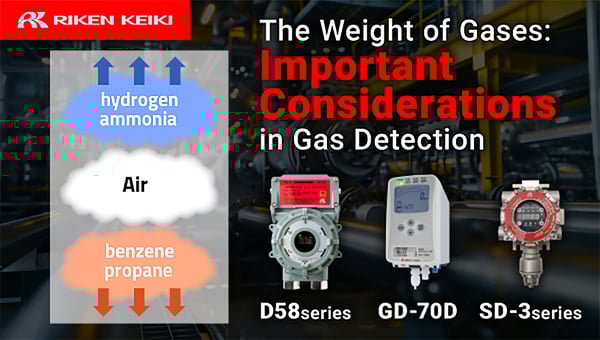
When choosing the right gas detector for your needs, it is important to consider factors such as the properties and location of the gas(es) you want to detect, as well as their concentration and the location where the gas detector will be installed. It is essential to select the right gas detector and the appropriate location, and this cannot be done without considering the weight of the gas(es) to be detected. In the same way that ice placed in a glass of water will float rather than sink, some gases will float to the top of a room when released into the air. This occurs because each type of gas has a different weight.
The specific gravity of a gas is also an important factor in determining the installation location of gas detectors.
For further details, please refer to the column below.
Want to hear from an expert?
You may also be
interested in
Detecting Early Signs of Spontaneous Combustion with Gas Detection and Sampling Technology - A Biomass Power Plant Case Study in Silo Safety Management
Gas detection systems prevent explosions in waste facility crushers by detecting combustible gases, ensuring worker safety, and maintaining operational stability through advanced technology and preventive strategies.
How to Improve Quality Control Precision in the Mass Production of Organic Semiconductors: Introduction of Direct Energy-Level Evaluation
Gas detection systems prevent explosions in waste facility crushers by detecting combustible gases, ensuring worker safety, and maintaining operational stability through advanced technology and preventive strategies.
Explosion Prevention at Tank Truck Loading Facilities -- A Case Study of High-Concentration Gas Detection and Reduced Operator Workload
Discover how advanced gas detection and nitrogen purging enhance safety and efficiency in tank truck fuel loading operations, minimizing explosion risks.
Hazardous Gas Leak Detection in Inert Atmosphere and Reduction of Management Costs – Case Studies: Safety Measures for Double - Walled LNG Tanks.
Explore effective hazardous gas leak detection solutions for double-walled LNG tanks, focusing on infrared technology and management cost reduction strategies.
Product Application Case Studies