Safeguarding Next-Generation Ammonia Fuel Applications – Second-Level Calorific Value Control Technology for Unburned Gas Treatment
Table of Contents
Challenges in Treating Unburned Gas During Ammonia Co-Firing
Amid the global push toward decarbonization, the power generation sector and industrial operators are increasingly reassessing reliance on conventional fossil fuels and accelerating the transition to low-emission energy sources.
Among the various alternatives under consideration, including hydrogen and biomass, ammonia (NH₃) has gained significant attention. Ammonia produces no carbon dioxide during combustion, and established transportation and storage technologies allow it to be integrated relatively easily into existing infrastructure. As a result, it is widely regarded as a promising next-generation fuel.
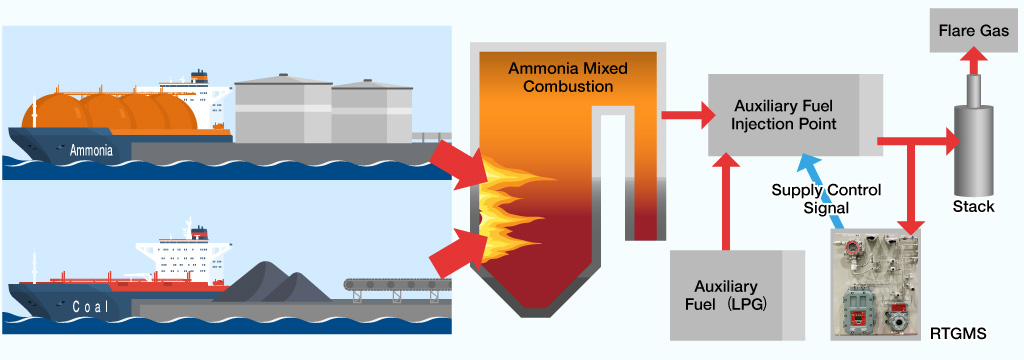
However, several technical challenges must be addressed before large-scale deployment becomes practical. One critical issue is the treatment of unburned ammonia generated during co-firing operations in coal-fired power plants and similar facilities.
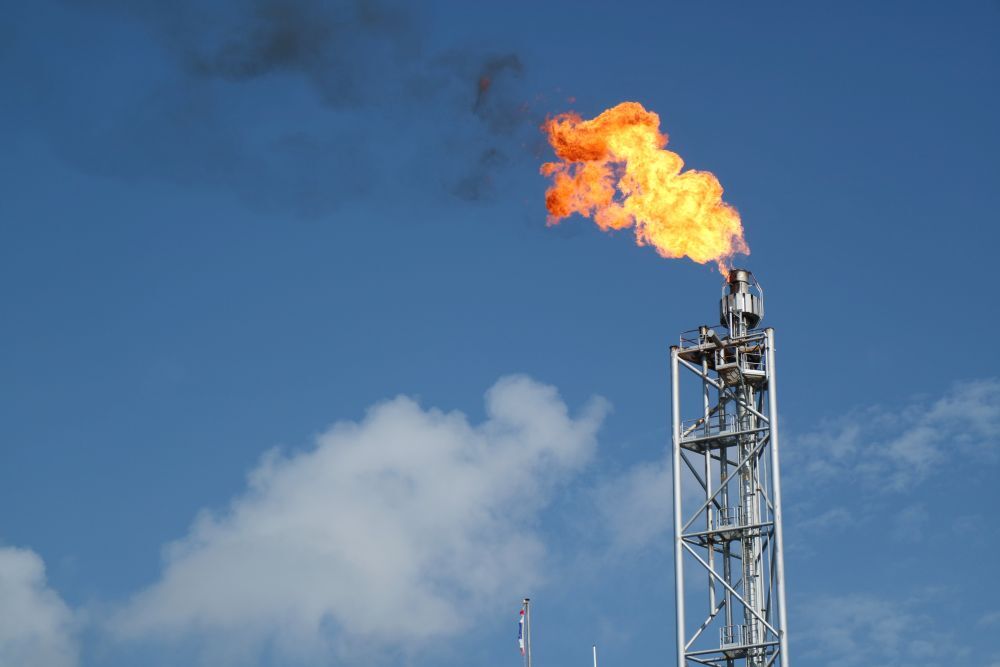
The release of unburned ammonia into the atmosphere presents serious environmental and safety risks. Consequently, residual gas must be routed to ground flares for controlled combustion and neutralization rather than vented directly.
Ammonia combustion introduces unique technical complexities, including:
-
Low flammability: Ammonia alone cannot sustain a stable flame.
-
Requirement for auxiliary fuel: Hydrocarbon-based gases must be blended to support combustion.
-
Accurate calorific value control: Continuous and precise measurement of the mixed gas heating value is essential to maintain stable combustion.
For safe and effective treatment of unburned gas, precise calorific value monitoring is indispensable. A key enabling factor in achieving this at the operational level is measurement response speed.
For additional insights on ammonia fuel safety and monitoring requirements, please refer to the related technical blog article available on our website.
The Importance of Response Speed in Auxiliary Fuel Control
The primary challenge in measuring the calorific value of mixed gases is measurement delay.
Calorimeter output is directly linked to the control of hydrocarbon auxiliary fuel supply. If measurement results are delayed, operational issues can arise, including:
-
Control lag: A time gap occurs between detection of insufficient heating value and valve actuation to increase auxiliary fuel supply.
-
Unburned gas release: Delayed fuel injection can result in incomplete combustion, allowing unburned ammonia to escape into the atmosphere.
To ensure reliable neutralization of residual ammonia, measurement data must be fed back to the control system within seconds. Rapid response capability is therefore essential.
High-Speed Calorific Measurement Using Sound and Optical Principles
In unburned gas treatment applications, target gases such as ammonia, hydrocarbon fuels, and nitrogen are typically present at high concentrations on a vol% basis. Continuous measurement under these conditions is difficult using conventional detection principles such as catalytic combustion sensors or electrochemical cells.
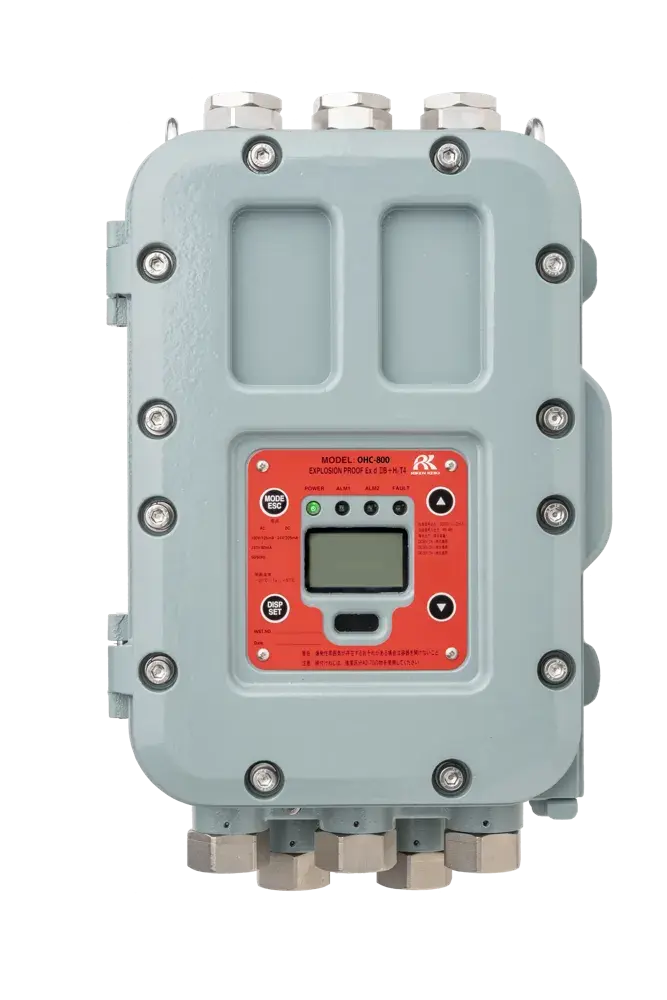
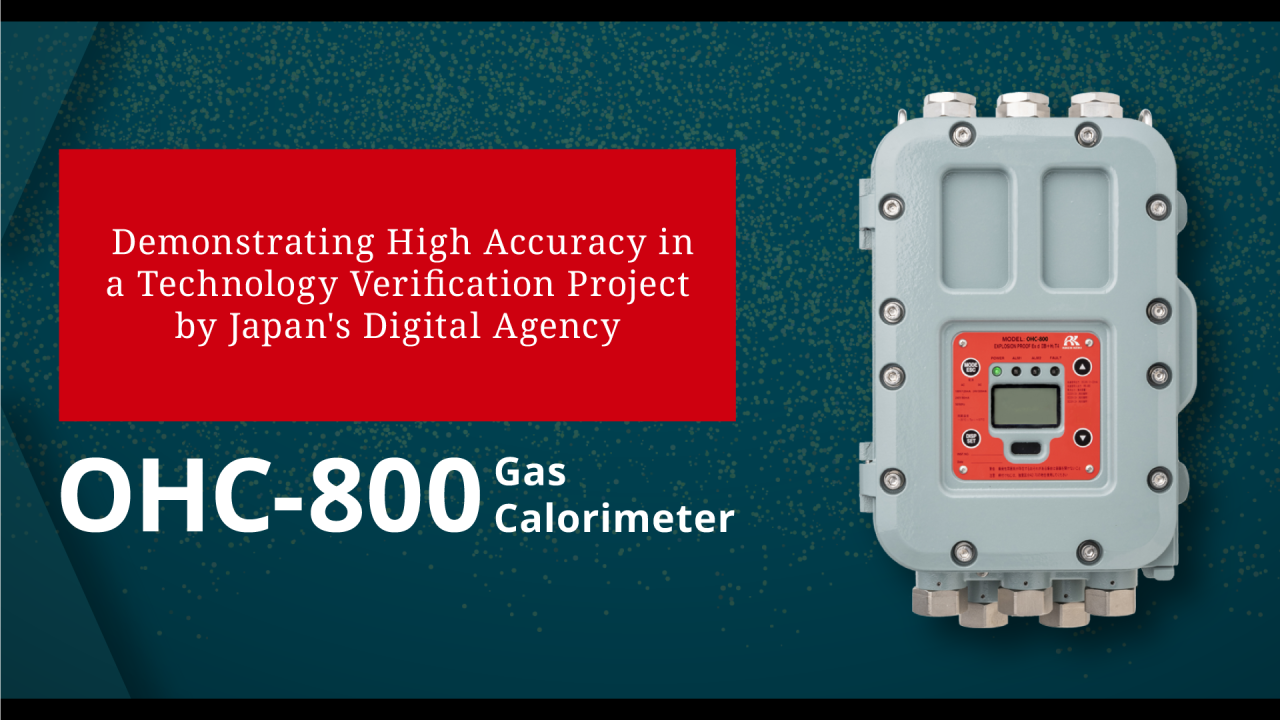
To enable continuous high-concentration measurement with rapid feedback, RIKEN KEIKI has developed the explosion-proof calorimeter OHC-800, incorporating its proprietary patented Opt-Sonic calculation technology. This instrument forms the core of the integrated RTGMS Real-Time Gas Monitoring System.
The Opt-Sonic method determines calorific value by combining two physical parameters: the speed of sound propagating through the gas and its refractive index measured by an optical interference sensor.
Conventional process analyzers typically require gas components to be separated internally before analysis, resulting in response times of several minutes. In contrast, the Opt-Sonic method eliminates the need for component separation. The sensor directly captures instantaneous physical property changes as the gas passes through.
This approach enables continuous calorific value measurement at extremely short intervals of approximately 0.25 seconds. By linking these high-speed data updates directly to PLC-based control systems, operators can respond in real time to sudden fluctuations in gas composition or flow conditions. This ensures precise valve control even during rapid process disturbances.
For further information on high-precision continuous measurement using Opt-Sonic technology, please refer to our related technical resources.
Designing Sampling Systems to Prevent Measurement Delays
As described above, the OHC-800 calorimeter provides exceptionally fast measurement performance. However, achieving true second-level feedback in real-world applications requires more than high sensor capability alone.
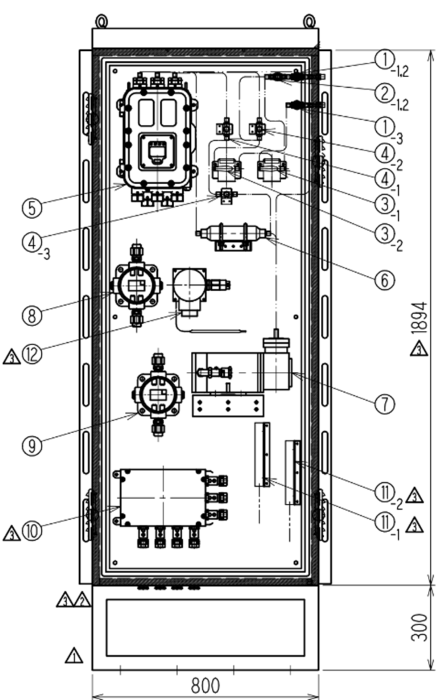
If it takes significant time for process gas to travel through piping before reaching the sensor, overall response performance is compromised. To address this issue, RIKEN KEIKI offers the RTGMS integrated system, designed to minimize gas transport delay and optimize calorific control in unburned gas treatment processes.
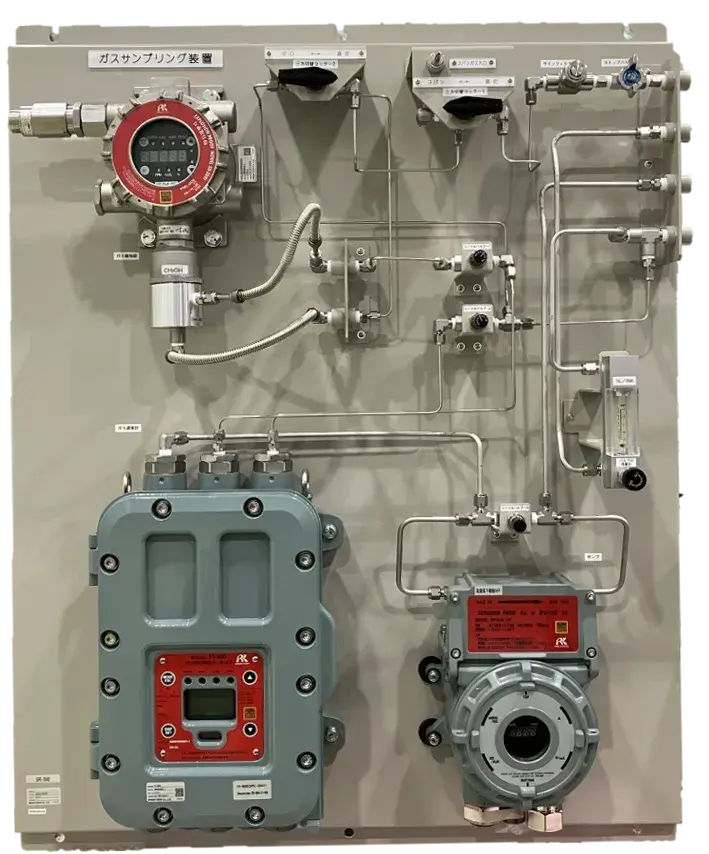
RTGMS combines the explosion-proof OHC-800 calorimeter with a programmable logic controller to create a comprehensive monitoring and control solution. A key feature is the ability to simultaneously measure the concentration of each gas and the total calorific value of the gases including ammonia, hydrocarbon fuels, and nitrogen, even within mixed gas streams.
To eliminate system-wide response delays, RTGMS incorporates practical design measures focused on installation configuration and sampling line engineering, including:
Four system design elements that balance response speed and measurement accuracy:
-
Explosion-proof installation capability
The calorimeter can be installed close to measurement points within hazardous areas, minimizing sampling line length. -
High-capacity sampling pump
A powerful pump rapidly draws gas from the main process line, reducing transport lag associated with long piping runs. -
Bypass sampling configuration
Rather than directing the full process flow to the analyzer, a fast-loop bypass system diverts only the required sample volume immediately upstream of the detector. -
Stable flow control
Measurement accuracy can be affected by flow fluctuations. Integrating a flowmeter with a control valve ensures a constant and stable sample flow to the detector.
By combining field-optimized sampling design with the high-speed OHC-800 calorimeter, RTGMS enables precise auxiliary fuel valve control. Proper calorific value management supports stable ammonia combustion and significantly reduces the risk of unburned gas release.

*This is an excerpt from a document.
Our Solution
Reliable neutralization of unburned ammonia requires both exceptional measurement response speed and a system architecture that directly links real-time data to process control.
Through the explosion-proof OHC-800 calorimeter and the integrated RTGMS platform, RIKEN KEIKI supports safe operation and stable performance in ammonia co-firing projects.
For examples of real-time multi-gas monitoring using RTGMS, please see this article.
Explosion-Proof Gas Calorimeter OHC-800
The OHC-800 is an Opt-Sonic calorimeter specifically designed for next-generation fuel applications. It delivers continuous mixed-gas calorific measurement with extremely fast response times and highly accurate output.
Its explosion-proof construction allows direct installation in hazardous areas, enabling enhanced safety management for ammonia co-firing operations.
Compared with conventional process analyzers, the OHC-800 and RTGMS solution can also offer significant cost advantages depending on operational requirements. For facilities seeking reliable and stable calorific control without investing in overly complex and high-cost analytical systems, RTGMS represents a highly cost-effective alternative.
Please note that measurement feasibility depends on specific gas compositions and application requirements. When considering implementation, we recommend consulting with our technical specialists to determine the most suitable configuration for your process environment.
PRODUCTS
Product type |
Fixed Gas Analyzer |
|---|---|
Applications |
|
single/multi |
Single |
Want to hear from an expert?
You may also be
interested in
OHC-800 Explosion-Proof Gas Calorimeter and Riken Keiki Gas Detectors Used in e-Methane Production Demo at Expo 2025 Osaka, Kansai, Japan
Riken Keiki technology revealed new insights into Tutankhamun’s golden mask, solving part of a mystery over 3,000 years in the making.
Publications