Protecting Product Quality with Automated Air Intake Control
Table of Contents
Risks Originating from Outside Air: How Intake Air Can Affect Product Quality
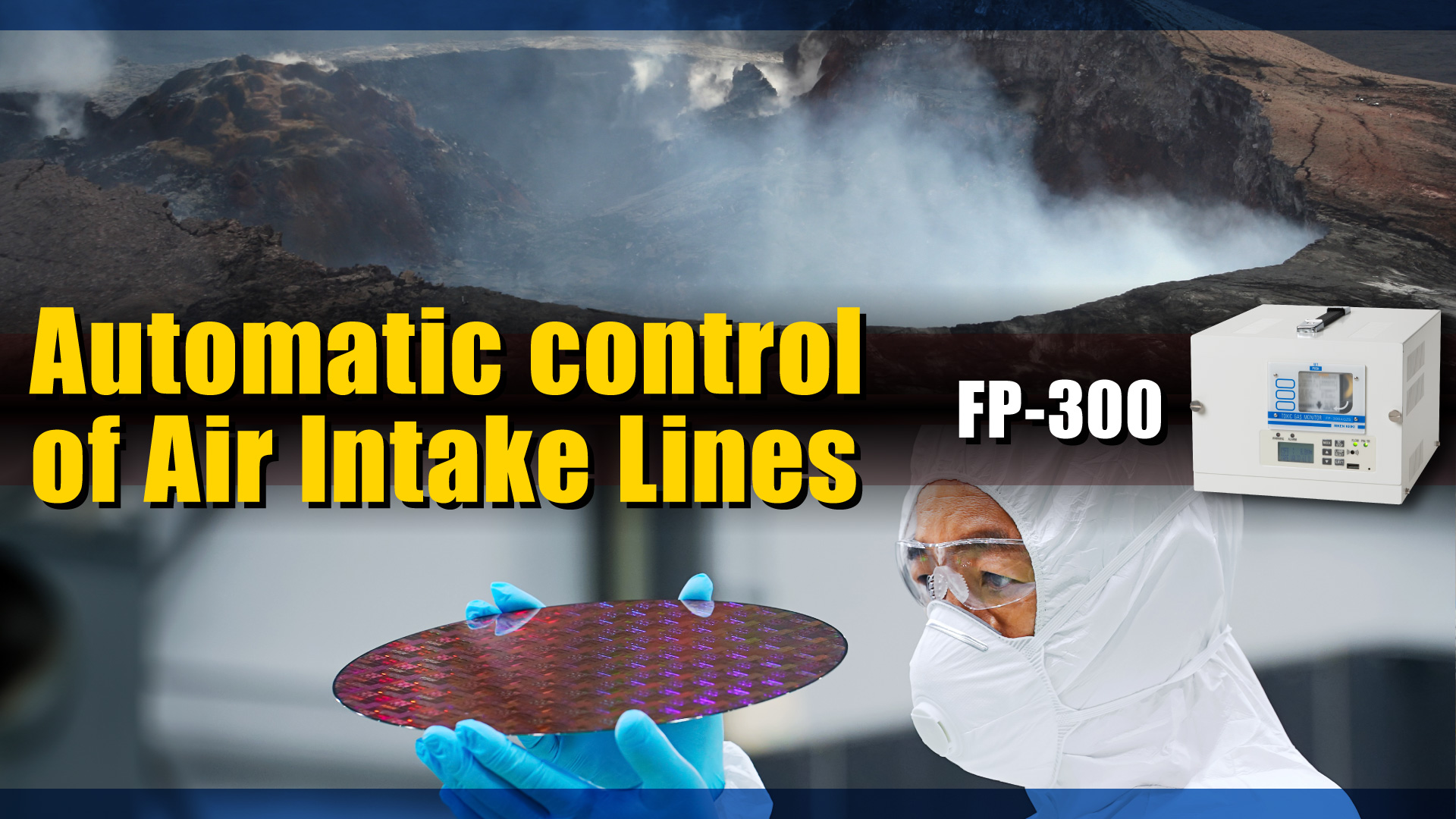
Product quality issues are not always caused by equipment failures or process-related problems. In some cases, the source lies outside the facility, in the ambient air brought in through the plant’s air intake system. Depending on the region and season, outside air can contain a range of contaminants, including volcanic gases, wildfire smoke, and photochemical smog. This article looks at how semiconductor plants can be affected by these outside-air-related risks and can carry out measures to address its impact.
Many of the world’s semiconductor manufacturing sites are located in East Asia, with Taiwan and Japan situated along the Pacific Ring of Fire. The risk is not limited to major volcanic eruptions. Invisible gases carried by the wind, including volcanic gases such as hydrogen sulfide and sulfur dioxide, can also negatively affect semiconductor production lines.
In advanced semiconductor manufacturing processes, where miniaturization continues to progress, even hydrogen sulfide and sulfur dioxide at concentrations of only a few ppb can become a cause of quality degradation. If these gases enter the plant, they can react chemically with copper wiring and silver-plated components, leading to corrosion.
This corrosion can cause short circuits and open circuits, which in turn may reduce product yield.
The Cost and Limitations of Continuous Filtration
Installing chemical filters in the outside air handling unit is one of the most reliable ways to prevent damage from volcanic gases. However, operating the system through chemical filtration 24 hours a day, 365 days a year is not an efficient approach.
High-cost filters degrade quickly under continuous use, increasing replacement expenses. In addition, filter pressure loss raises fan power consumption, further increasing operating costs.
To control costs, the air handling line should switch automatically only when gas is detected. However, standard electrochemical sensors are generally configured to alarm at occupational exposure limits intended to protect worker safety. They are not well suited for highly sensitive detection in the few-ppb range, where semiconductor quality can already be affected.
For reliable automatic control at ppb-level concentrations, tape-type gas detection is a more suitable approach. Another major advantage of this method is its strong resistance to interference from other gases.
Tape-Type Gas Detection Technology Combining ppb-Level Sensitivity and High Selectivity
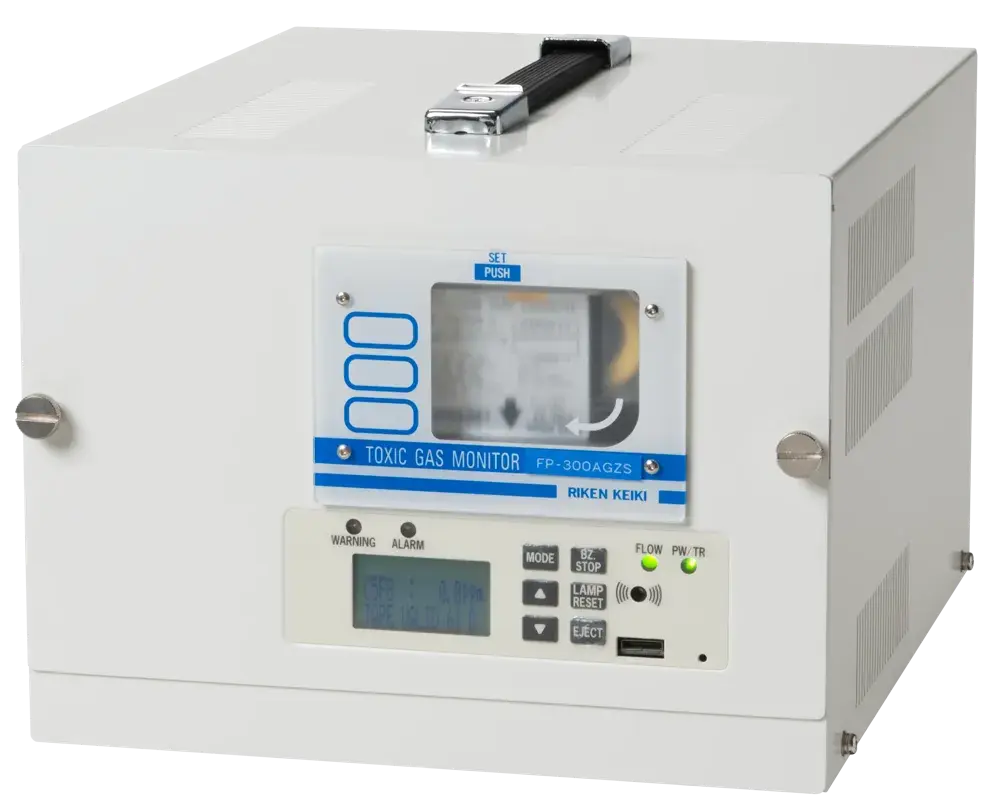
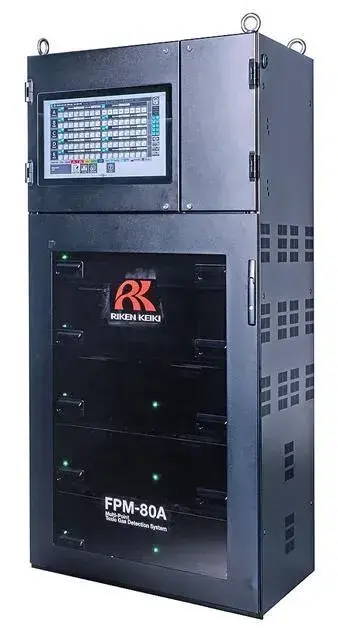
This automation challenge can be addressed with tape-type gas detectors such as the FP-300 and FPM-80A.
These instruments use a tape-type photometric detection method with excellent gas selectivity.
Using a dedicated detection tape formulated for hydrogen sulfide, the system measures gas by irradiating a chemically treated tape that changes color when it reacts with the target gas. The detector then reads that color change optically.
This detection principle is particularly well suited to outside air monitoring at semiconductor plants for several reasons:
-
High sensitivity at the 1 ppb level
It accurately captures trace concentration changes that can create corrosion risk. -
High selectivity with minimal false alarms
Because the system uses a dedicated color-forming reagent on the tape, it is far less likely to respond to non-target gases such as exhaust components or organic solvents. -
Physical evidence of detection
When gas is detected, the tape retains visible discoloration, providing a clear visual record that gas ingress occurred.
Because this method can detect target gases with high precision while remaining largely unaffected by other gases or environmental changes, it is well suited for use as the trigger for automatic control.
Automated Control That Reduces Cost and Labor
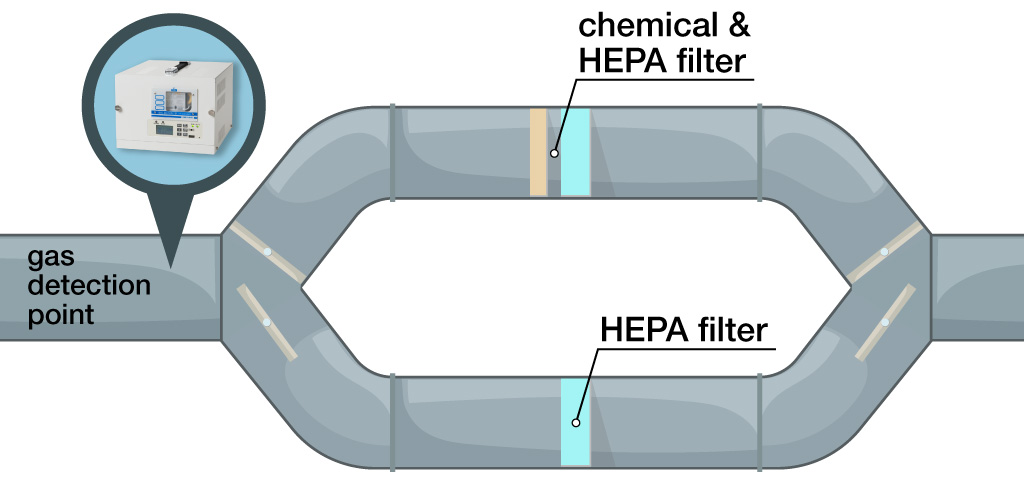
When a tape-type gas monitor is integrated with the HVAC system, the plant can operate more efficiently by routing air through chemical filtration only when needed.
For most of the year, when no gas is present, intake air can pass through a line equipped only with a HEPA filter. Then, only when the detector senses gas, the system automatically switches to a line that combines a chemical filter with HEPA filtration.
This approach helps extend the service life of expensive chemical filters while also reducing fan energy consumption. At the same time, it eliminates the need for manual monitoring and operator intervention.
The key advantage of this system is its ability to support both cost reduction and product quality protection at a high level.
Our Solutions
RIKEN KEIKI provides the gas detection technologies that make this type of automatic control possible.
High-Sensitivity Toxic Gas Monitor FP-300
The FP-300 is a tape-type gas monitor designed for hydrogen sulfide detection at outside air intake points in semiconductor plants. It provides high-sensitivity detection at concentrations of only a few ppb.
Because it is less susceptible to interference gases, it helps prevent unnecessary line switching caused by false alarms. The moment gas is detected, the FP-300 can send a gas detection signal directly to the HVAC system. This allows seamless integration with plant equipment and supports the implementation of a highly reliable automatic switching system.
By combining labor-saving operation with precise gas monitoring, the FP-300 helps semiconductor manufacturers protect product quality and improve facility efficiency.
The FPM-80A, a tape-type multi-point gas detection system for environmental monitoring, is also available in our product lineup. A single unit can monitor up to 80 locations. For more details, please refer to the link below.
PRODUCTS
Product type |
Fixed Gas Detector |
|---|---|
Applications |
|
single/multi |
Single |
Product type |
Fixed Gas Detector |
|---|---|
Applications |
|
single/multi |
Multi |
Want to hear from an expert?
You may also be
interested in
Protecting Product Quality with Automated Air Intake Control
Outside air brought in through the plant’s air intake system can cause product quality issues. This article explains outside-air-related risks and introduces an approach using tape-type gas detection for high-sensitivity detection and automated control.
Why Redundancy is the Lifeline of Semiconductor Manufacturing? The “Dual-Backup” That Prevents Production Stop During Equipment Failures.
Discover how redundancy in semiconductor manufacturing, particularly through the FPM-80A gas detector, ensures continuous operation and mitigates costly production stops.
The Evolution of Gas Detection Tape: 180 Days of Maintenance-Free Operation
Discover how the FPM-80A gas detection tape offers 180 days of maintenance-free operation, enhancing safety and reducing costs in semiconductor manufacturing.
Publications