Skip to content

Table of Contents

    Visualizing “Invisible Hazards” and Adhering to International Standards

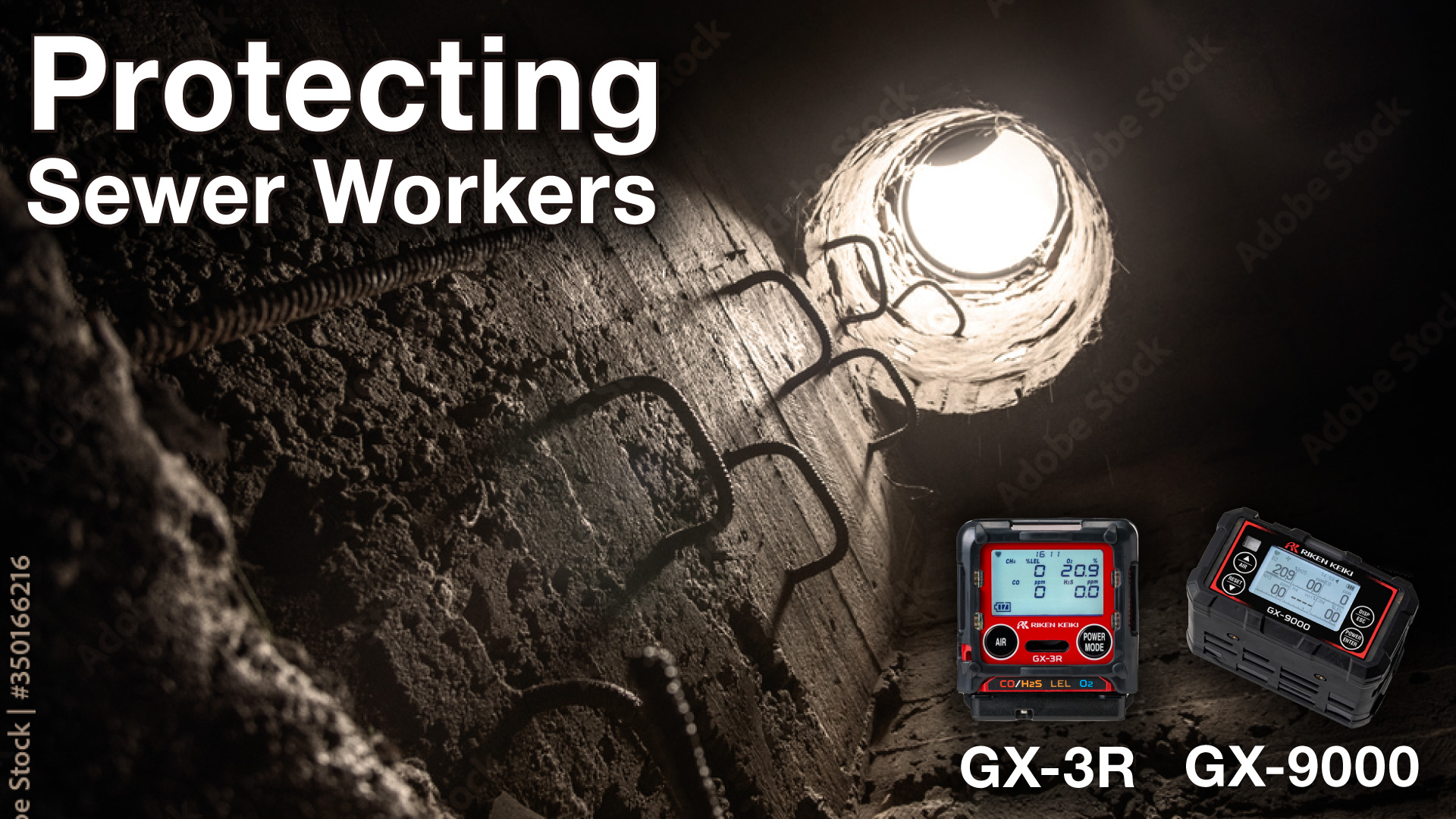
     Confined spaces such as sewer pipelines, manholes, and wet wells at pumping stations are work environments prone to inadequate ventilation and requiring careful management. They are defined as one type of working environment requiring careful management under international guidelines and standards such as USA OSHA (Occupational Safety and Health Administration), Singapore WSH (Workplace Safety and Health), and German TRGS (The Technical Rules for Hazardous Substances). Two major, invisible risks lurk there.

    • Risk of Oxygen Deficiency:
      While atmospheric oxygen concentration is typically around 20.9%, oxygen is consumed within tanks due to microbial respiration, metal oxidation, and organic matter decomposition. USA OSHA regulations consider any atmosphere with an oxygen level below 19.5 percent as hazardous areas, prohibiting entry into such environments falling below this threshold. Specific symptoms associated with decreasing oxygen concentration under USA OSHA[A2.1][A2.2] regulations are as follows:
      • 19.5%: Minimum acceptable oxygen level.

      • 15–19%: Decreased ability to work strenuously. Impair coordination. Early symptoms.

      • 12–14%: Respiration increases. Poor judgement.

      • 10–12%: Respiration labored. Lips blue.

      • 8–10%: Mental failure. Fainting, Nausea, Unconsciousness, Vomiting.

      • 6–8%: 50%: 4-5 minutes- possible recovery, 6 minutes - 50% fatal & 8 minutes - fatal 

      • 4–6%: Coma almost instantaneously. Death.

    • Hydrogen sulfide (H₂S) generation:
      Hydrogen Sulfide gas, which is highly toxic, is generated when components contained in sewage are decomposed by bacteria in stagnant, anaerobic environments.
      These gases are invisible, and Hydrogen Sulfide is heavier than air, tending to accumulate at the bottom. Therefore, entering confined spaces without prior environmental testing is extremely dangerous, and strict adherence to safety procedures is essential and life-threatening. 
      Furthermore, understanding this “gas weight (specific gravity)” is also a crucial point for properly selecting and installing fixed gas detectors.
      For details, please refer to the blog below.
      Details here [Link: Blog Post].

    Aspirated Sampling Gas Detection from Ground

     The absolute rule for safety checks before entering is: “Complete measurements from the ground (outside the manhole) before workers enter the hazardous area.”

    This requires using a “pump suction-type” detector that forcibly draws air from deep within the sewer for measurement.

    Gases within confined spaces tend to stratify based on their specific gravity.

    • Upper layer: Light gases like Methane

    • Lower layer: Heavy gases like Hydrogen Sulfide

    Therefore, simply measuring at the manhole opening area is insufficient.The Sampling tube must be lowered to points in the upper, middle, and lower layers (just above the water surface) to reliably capture the stratified gases.

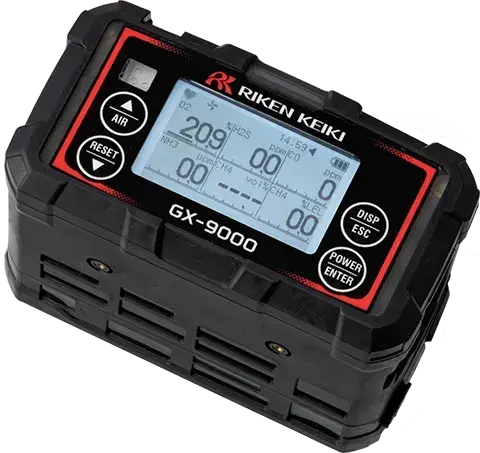
    • Recommended Equipment: Model GX-9000

    Riken Keiki's high-end model “GX-9000” features a powerful pump capable of suction from up to 45 meters away. Even in deep vertical manhole or long horizontal sewer, workers can accurately measure gas concentrations deep underground from the surface ground.

    Furthermore, Riken Keiki participates in an advanced initiative using drones to detect gases inside sewer systems as pre-entry safety checks.
    Details here [Link: Blog Post].

    Safety Verification and Work Permits

     To issue a “work permit” on-site as safety, all the following safety criteria must be met:

    1. Oxygen: At least 19.5% (OSHA standard compliant) (to prevent oxygen deficiency)

    2. Flammable Gases: Below the lower explosive limit threshold (to prevent explosions)

    3. Toxic Gases: Hydrogen Sulfide and Carbon Monoxide below permissible exposure limits (to prevent poisoning)

    *Depending on the country or region, measurement of Carbon Dioxide and Ammonia may also be recommended.

    Traditionally, multiple procedures specific to each gas were required. However, the “GX-9000,” capable of simultaneously detecting up to six types of gases, enables comprehensive verification with a single measurement. It eliminates the risk of missed checks, quickly and reliably verifying the safety of the working environment.

    Changing Environments and the Risk of Olfactory Numbness

     Even if measurements before entering the confined space indicate “safety,” this does not guarantee safety during the work itself all time.

    After work begins, risks arise due to environmental changes.

    • Sudden Gas Release from Sludge Agitation: 
      When workers walk inside sewer and compact the sludge at the bottom, trapped gases can be released abruptly. This can cause localized high concentrations of Hydrogen Sulfide or a rapid drop in oxygen levels, requiring vigilance.

    • Relying on “smell/odor” is dangerous: 
      At low concentrations, Hydrogen Sulfide has a rotten egg odor. However, as concentrations rise, it causes “Olfactory Nerve Paralysis,” numbing the sense of smell and making it difficult to detect the odor. Assuming “it's safe because I don't smell anything” can be fatal. This is precisely why constant monitoring using detectors, rather than human senses, is crucial.

    Wearable Diffusion Gas Detector During Work

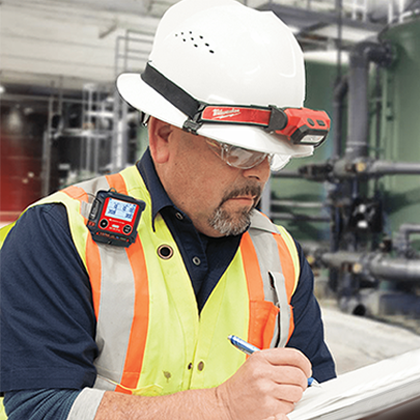
     Recommendation: While working underground, always carry a small detector. The recommended placement is within the “breathing zone” (approximately 30 cm radius) near the worker's nose and mouth. To quickly detect low-density gases or sudden concentration changes near the face, attaching it to a chest pocket or collar area is recommended.

    feature-1-420-1-1

    Recommended equipment

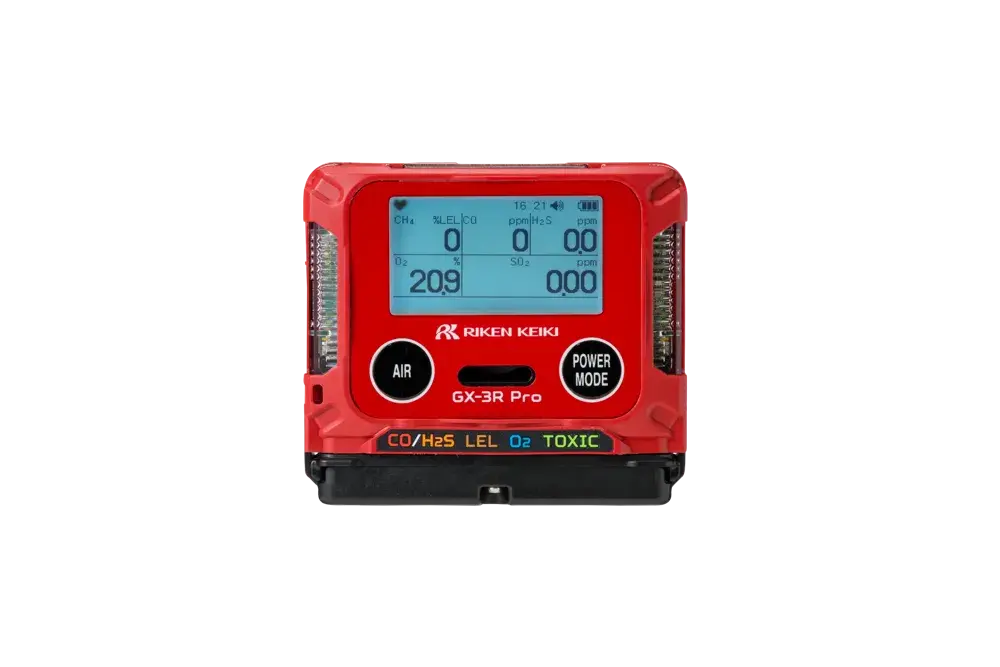
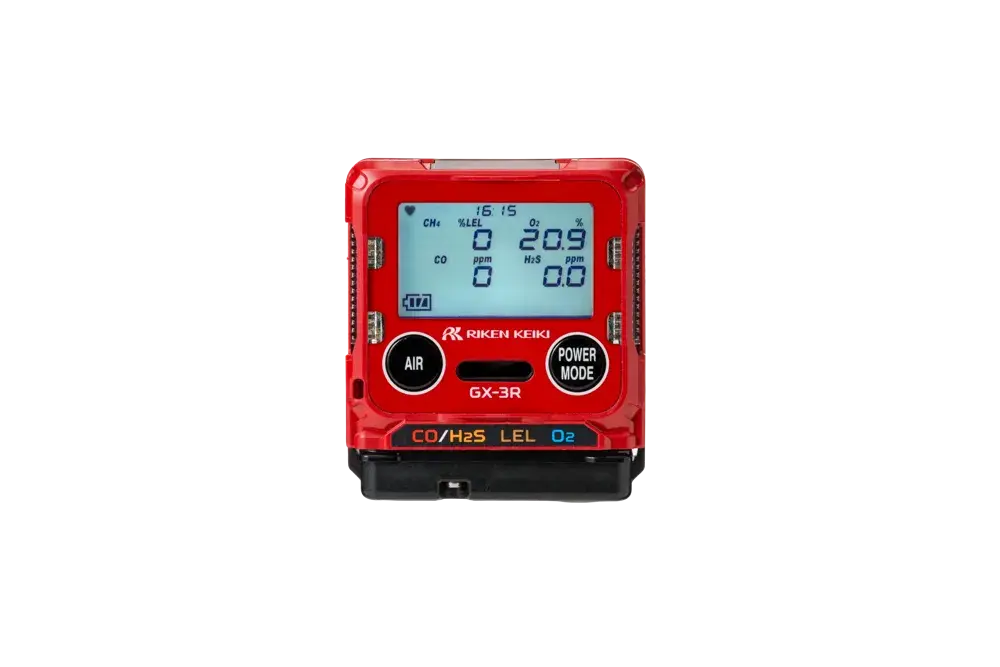
    Model GX-3R: 
    The world's smallest and lightest portable model (approx. 100g) with four-component monitoring.  It won't interfere with your working activities and won't feel burdensome with stress when worn continuously.

    Protecting Lives Through Immediate Evacuation

     When a detector sounds an alarm, you must evacuate to the surface immediately, regardless of any reason. Furthermore, in confined space accidents, “Secondary Disasters” where rescuers attempting to aid fallen colleagues become victims themselves are all too common. Under any circumstances, please avoid re-entering the site after alarm without proper protective equipment (such as air respirators).

    “Pre-entry Aspirated Gas Detector (GX-9000)” and “Diffusion Monitoring During Work (GX-3R, etc.)”.

    Thoroughly implementing this dual-pronged approach is the most reliable means of preventing tragic workplace accidents.

    Our Solutions

    Riken Keiki provides advanced gas detection solutions for sewer infrastructure maintenance, designed with both international requirements and on-site operational needs in mind.

    Portable Gas Monitor [GX-9000]
    Simultaneously detects up to 6 components and features 45m deep suction capability, ensuring reliable safety assessment before entering manholes. Its rugged design operates stably even in harsh working environments.

    For product details click here.

    Wearable Gas Monitor [GX-3R]
    The world's smallest class detector, protecting workers' breathing zones. The GX-3R features alarm lamps on three sides and a loud buzzer, reliably signaling danger even in noisy conditions.

    For product details click here.

    PRODUCTS

    Portable Gas Monitor
    GX-3R

    Product type

    Portable Gas Detector

    Applications

    single/multi

    Multi
    Portable Gas Monitor
    GX-3R Pro

    Product type

    Portable Gas Detector

    Applications

    single/multi

    Multi
    Portable Multi Gas Detector
    GX-9000

    Product type

    Portable Gas Detector

    Applications

    single/multi

    Multi
    ← →
    inquire_slash

    Want to hear from an expert?

    Our team will be happy to help. Let’s find the right solution for you.

    Publications

    case_img-1
    See how companies across different industries are using our advanced gas detectors to prevent accidents, ensure compliance, and enhance safety. Exclusive case studies inside!

    case_img-1