9000 Series
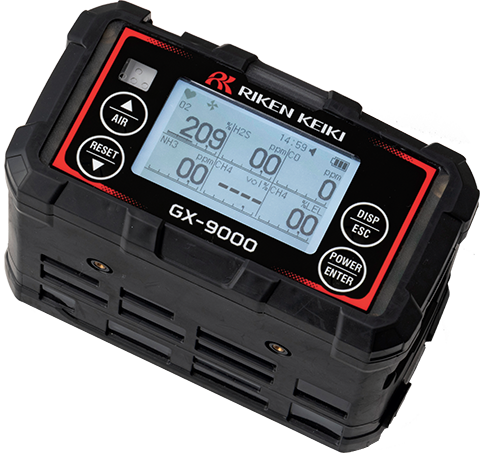
9000 Series
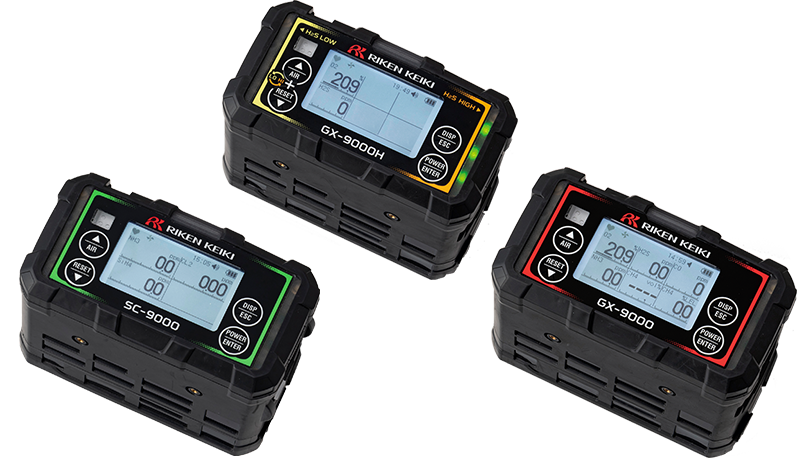

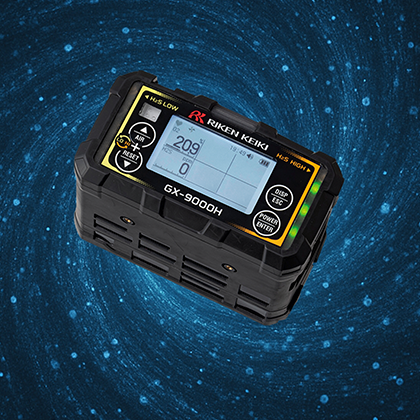
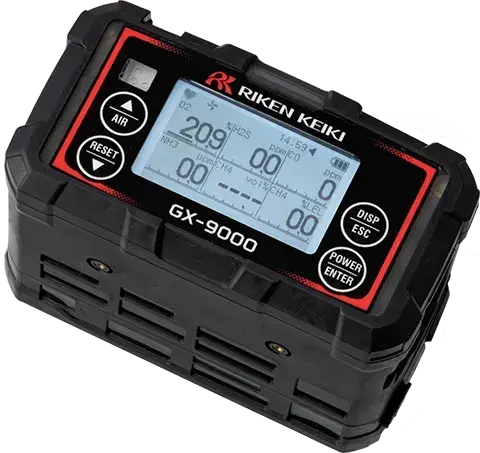
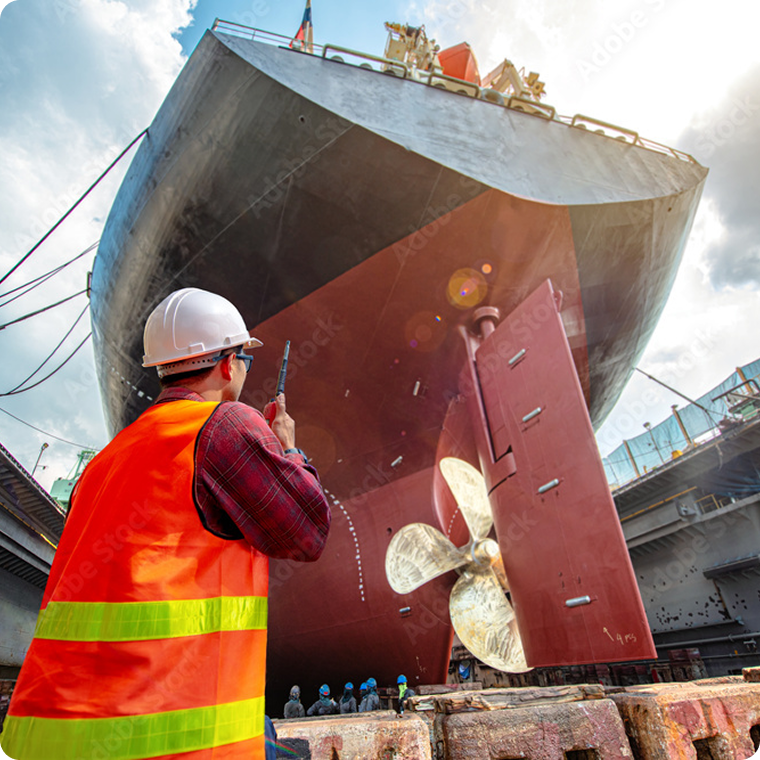
Both the GX-9000 and GX-9000H are MED-approved devices. Designed for use in the marine industry, both models are adapted to meet the needs of a range of settings and applications in the marine industry.



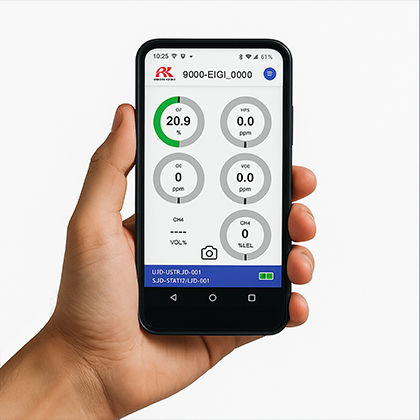
Use with a sampling tube attachment of up to 45m to measure various gas levels within tanks or during gas freeing.
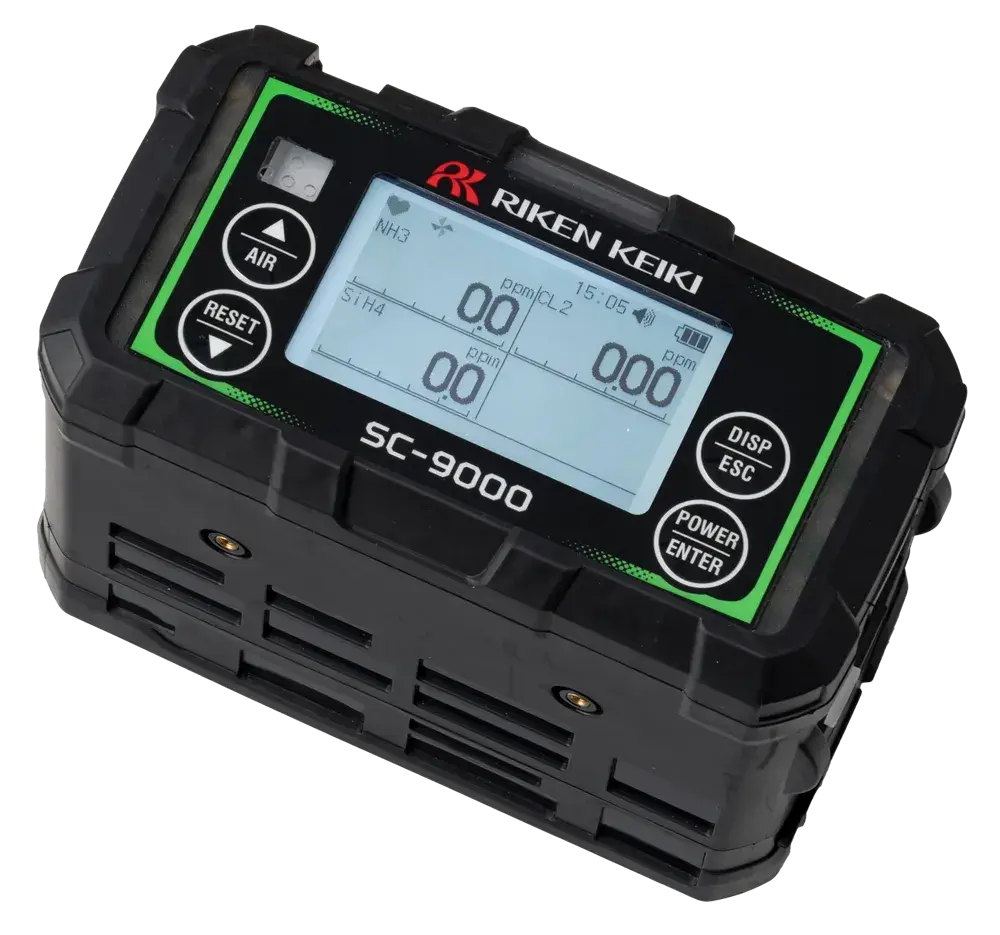
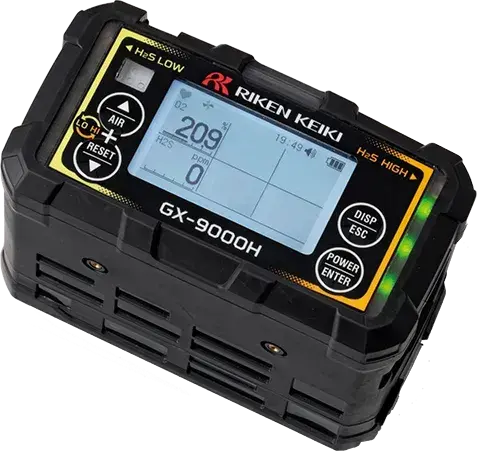
| Product Name | SC-9000 | GX-9000H | GX-9000 | |
|---|---|---|---|---|
| Product Image |
|
|
|
|
| Product Subtitle | Portable Multi Toxic Gas Detector | Portable Multi Gas Detector | Portable Multi Gas Detector | |
| Product Type | Portable Gas Detector | Portable Gas Detector | Portable Gas Detector | |
| Industries | Semiconductors, Marine | Marine | Infrastructure, Marine | |
| Use Purpose | Safety management | Safety management | Safety management | |
| Single/Multi | Multi | Multi | Multi | |
| Certification | Japanese Certification, IECEx, ATEX, JIS | Japanese Certification, IECEx, ATEX, MED (Marine Equipment Directive), JIS, EN, etc.(depends on the specification) | Japanese Certification, IECEx, ATEX, MED (Marine Equipment Directive), JIS, EN, etc.(depends on the specification) | |
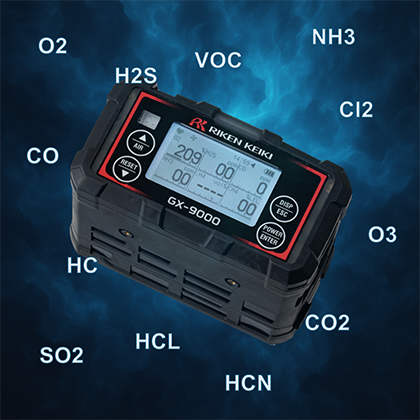
| Detectable Gas | Up to 3 Toxic Gases NH3 / F2 / HF / Cl2 / HCl / HBr / ClF3 / O3 / SiH4 / Si2H6 / PH3 / HCN / NO / NO2 / SO2 (Up to 3 Can Be Selected) *Combination Restrictions Apply | Up to 5 Types O₂, CO, H₂S (0–200 ppm) (Up to 3 Can Be Selected from Red Text), Combustible, H₂S (0–1,000 ppm) (Up to 2 Can Be Selected from Blue Text) |
Up to 6 Types O₂, CO, H₂S (0–200 ppm) (Up to 3 Can Be Selected from Red Text), Combustible, VOC, NH₃, O₃, Cl₂, SO₂, HCl, HCN, CO₂ vol% (Up to 3 Can Be Selected from Blue Text) |
|
| Detection Range | Depend on Target Gas | Depend on Target Gas | Depend on Target Gas | |
| Principle of Detection |
Potentiostatic Electrolysis Method | Non-Dispersive Infrared Method, Potentiostatic Electrolysis Method | New Ceramic Catalytic Method, Thermal Conductivity Method, Non-Dispersive Infrared Method, Potentiostatic Electrolysis Method, Photo-Ionization Detector | |
| Sampling Method | Internal Sample Pump | Internal sample pump | Internal sample pump | |
| Ingress Proof Rating |
IP66/68 | IP66/68 | IP66/68 | |
| Dimensions | Approx. 158 (W) × 85 (H) × 132 (D) mm (excluding projections) | Approx. 158 (W) × 85 (H) × 132 (D) mm (excluding projections) | Approx. 158 (W) × 85 (H) × 132 (D) mm (excluding projections) | |
| Weight | Approx. 1.1 kg (Includes Battery And Battery Unit) | Approx. 1.1 kg (Includes Battery And Battery Unit) | Approx. 1.1 kg (Includes Battery And Battery Unit) | |
| Remarks | Continuous Operation Time: Approx. 35 Hours (Rechargeable Battery), Approx. 15 Hours (Dry Battery) High-Concentration Hydrogen Sulfide Measurement | Continuous Operation Time: Approx. 25 Hours (Rechargeable Battery), Approx. 12 Hours (Dry Battery). Combustible Gas Conversion Function | ||
| Power Source | Rechargeble lithium-ion battery unit, Dry battery unit (AA alkaline battery 6 pcs.) | Rechargeable Lithium-Ion Battery Unit, Dry Battery Unit (AA Alkaline Battery 6 pcs.) | Rechargeable Lithium-Ion Battery Unit, Dry Battery Unit (AA Alkaline Battery 6 pcs.) | |
| Continuous Operation |
Approx. 60 Hours [Lithium Ion Battery Unit] Approx. 30 Hours [Dry Battery Unit] (At 25℃, No Alarm, No Lighting) |
Approx. 35 Hours (Fully Charged) [Lithium Ion Battery Unit] Approx. 15 Hours (25℃, No Alarm, No Lighting) [Dry Battery Unit] Varies Depending on the Mounted Sensor. |
Approx. 25 Hours (Fully Charged) [Lithium Ion Battery Unit] Approx. 12 Hours (25℃, No Alarm, No Lighting) [Dry Battery Unit] Varies Depending on the Mounted Sensor. |
|
| Operating Temperature Range |
-20 ℃ to +50 ℃ (no sudden changes) | Temporary Ambient Conditions : --40 ℃ To +60 ℃ (No Sudden Changes) Continuous Ambient Conditions : --20 ℃ To +50 ℃ (No Sudden Changes) |
Temporary Ambient Conditions : -40 ℃ To +60 ℃ (No Sudden Changes) Continuous Ambient Conditions : -20 ℃ To +50 ℃ (No Sudden Changes) * May Vary Depending On The Mounted Sensor |
|
| Operating Humidity Range |
20 to 90 %RH (no condensation) |
Temporary Ambient Conditions : 0 To 95 %RH (No Condensation) Continuous Ambient Conditions : 10 To 90 %RH (No Condensation) * May Vary Depending On The Mounted Sensor |
Temporary Ambient Conditions : 0 To 95 %RH (No Condensation) Continuous Ambient Conditions : 10 To 90 %RH (No Condensation) * May Vary Depending On The Mounted Sensor. |
|
| Applicable Instruments |



Expert Support Awaits – Get in Touch Today!





Why Customers Choose Us
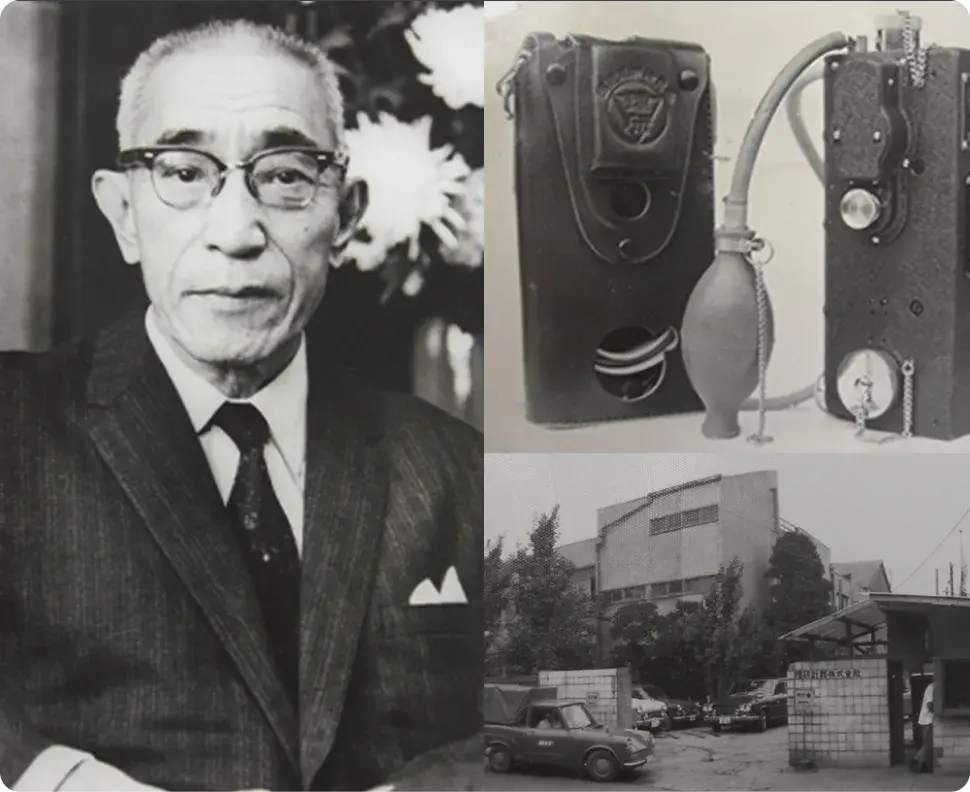
Since our beginnings in 1939, Riken Keiki has continued to lead the way in gas detection technology, laying the foundations that support our modern society.
Discover why customers continue to choose Riken Keiki, the global standard in gas detection equipment.
Since our beginnings in 1939, Riken Keiki has continued to lead the way in gas detection technology, laying the foundations that support our modern society.
Discover why customers continue to choose Riken Keiki, the global standard in gas detection equipment.
See Our Solutions in Action!
See Our Solutions in Action!



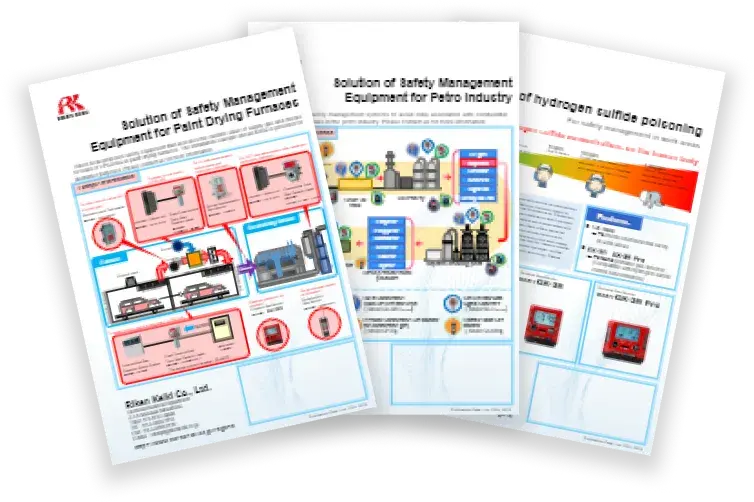
Publications