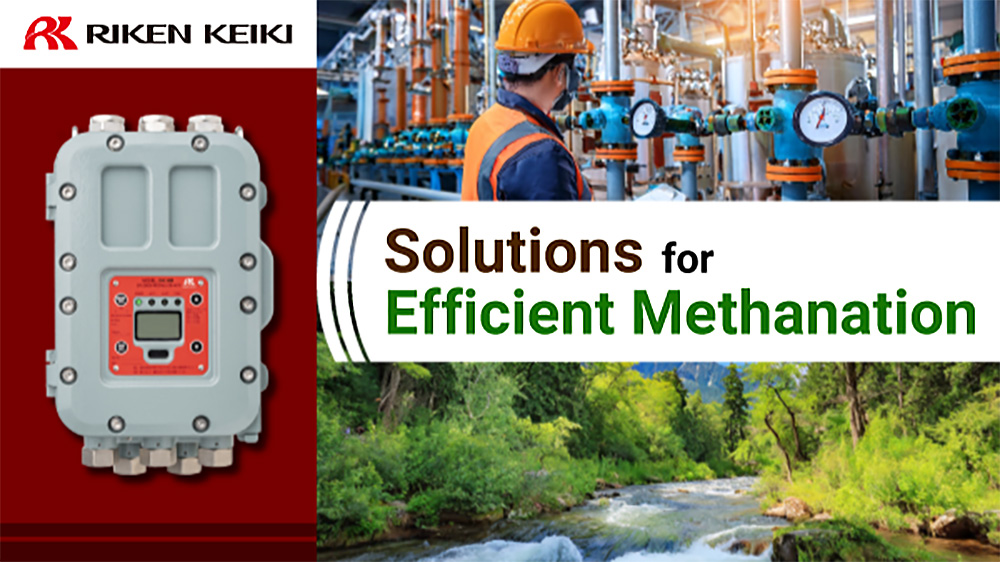

Solutions for Efficient Methanation
Table of Contents
Overview of Methanation
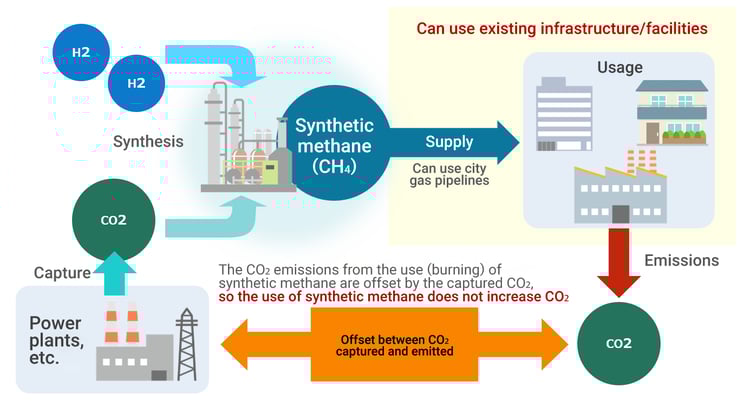
Methanation is a technology that synthesizes methane by reacting carbon dioxide (CO₂) with hydrogen. The interest in this synthetic methane is driven by environmental issues related to greenhouse gases.
Methane is the main component of natural gas, which is effectively utilized in the existing energy infrastructure. However, the carbon dioxide released when burning fuel gases such as methane and natural gas, has long been recognized as a major contributor to greenhouse gases.
This is where synthetic methane, produced through methanation, comes into play. By using CO₂ captured from sources like power plants and factories, the amount of CO₂ released when burning methane can be offset by the amount of CO₂ captured (used) for the production of synthetic methane. As a result, net greenhouse gas emissions can be reduced to virtually zero. This makes methanation a promising approach for achieving carbon neutrality.
**Carbon neutrality: Achieving a balance between CO₂ emissions and their removal.
Methanation Process
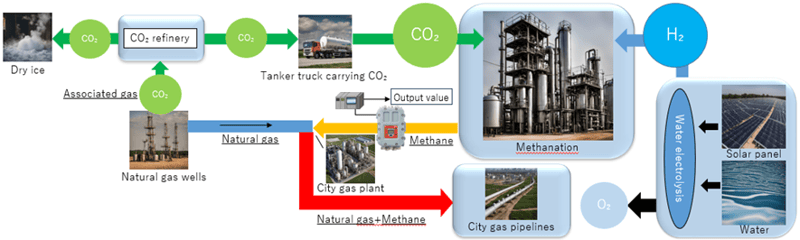
The methanation process is largely divided into three steps:
- Supply of carbon dioxide and hydrogen
- Methane synthesis
- Methane gas supply
1. Supply of Carbon Dioxide and Hydrogen
2. Methane Synthesis
3. Methane Gas Supply
Relationship Between Methanation and Gas Monitoring
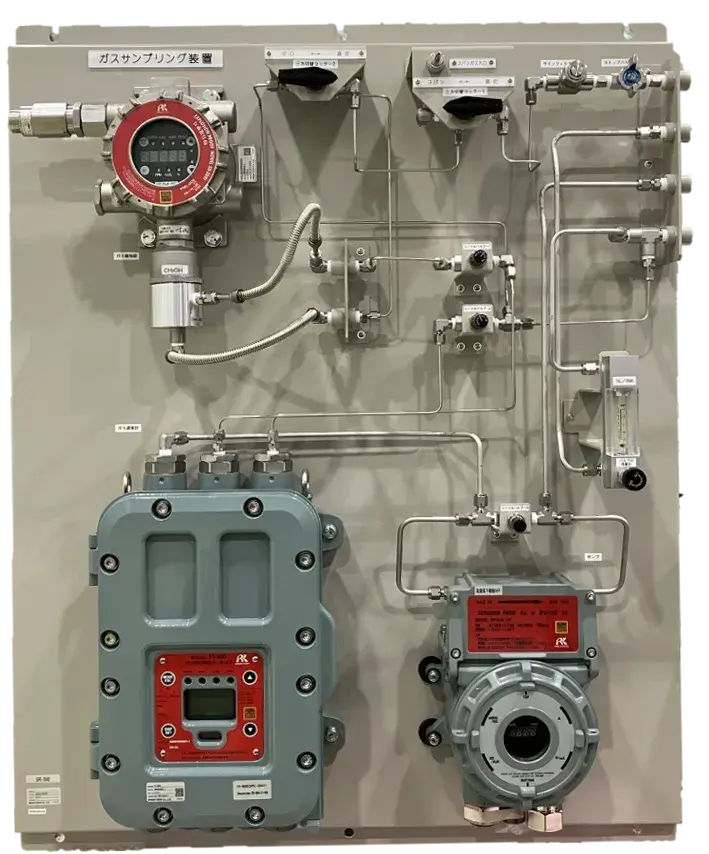
As previously mentioned, it is crucial to monitor methane concentration during methanation to ensure appropriate operating conditions. So, how should gas concentrations be measured in a methanation plant?
One option is to periodically measure the concentration using gas chromatography. However, since the gas continuously flows through the plant and its concentration constantly fluctuates, near real-time measurement is required, but gas chromatography cannot provide real-time measurements. Additionally, the gas obtained through methanation contains various gases, including methane, so the concentrations of multiple gases must be measured simultaneously.
Riken Keiki Products Optimized for Accurate Methanation
In addition to methanation, Riken Keiki offers various solutions for reducing greenhouse gases, including:
- Controlling hydrogen co-firing turbines
- Monitoring ammonia synthesis and decomposition processes
- Controlling co-firing of natural gas and ammonia
- Monitoring flare gas concentrations
- Monitoring steel gas composition ratios
If you have challenges measuring various gases or need to optimize your measurement environment, feel free to contact us.
PRODUCTS
Want to hear from an expert?
You may also be
interested in
Protecting Workers from Oxygen Deficiency and Hydrogen Sulfide Poisoning. –– The “Dual Safety Measures” at Sewer Construction Sites.
Ensure worker safety in sewer construction with dual safety measures against oxygen deficiency and hydrogen sulfide poisoning. Learn about advanced gas detection solutions and protocols.
Why Redundancy is the Lifeline of Semiconductor Manufacturing? The “Dual-Backup” That Prevents Production Stop During Equipment Failures.
Discover how redundancy in semiconductor manufacturing, particularly through the FPM-80A gas detector, ensures continuous operation and mitigates costly production stops.
The Evolution of Gas Detection Tape: 180 Days of Maintenance-Free Operation
Discover how the FPM-80A gas detection tape offers 180 days of maintenance-free operation, enhancing safety and reducing costs in semiconductor manufacturing.
Publications