Skip to content

Table of Contents

    The Risk of Spontaneous Combustion and Explosions in Fuel

    As the transition toward decarbonization accelerates, energy sources are becoming increasingly diverse. Solid fuels such as biomass and Refuse Paper and Plastic Fuel (RPF) are being used more frequently as part of fuel conversion strategies and waste recycling initiatives. At the same time, as variable renewable energy sources such as solar and wind power have been adopted, energy storage systems using lithium-ion batteries are also being introduced to stabilize electricity supply.

    Despite these technological advances, one critical challenge remains common across these facilities: managing fire and explosion risks. These challenges have also been recognized as important in the storage and transportation of traditional fuels such as coal, particularly in terms of the early detection of smoldering and spontaneous combustion.

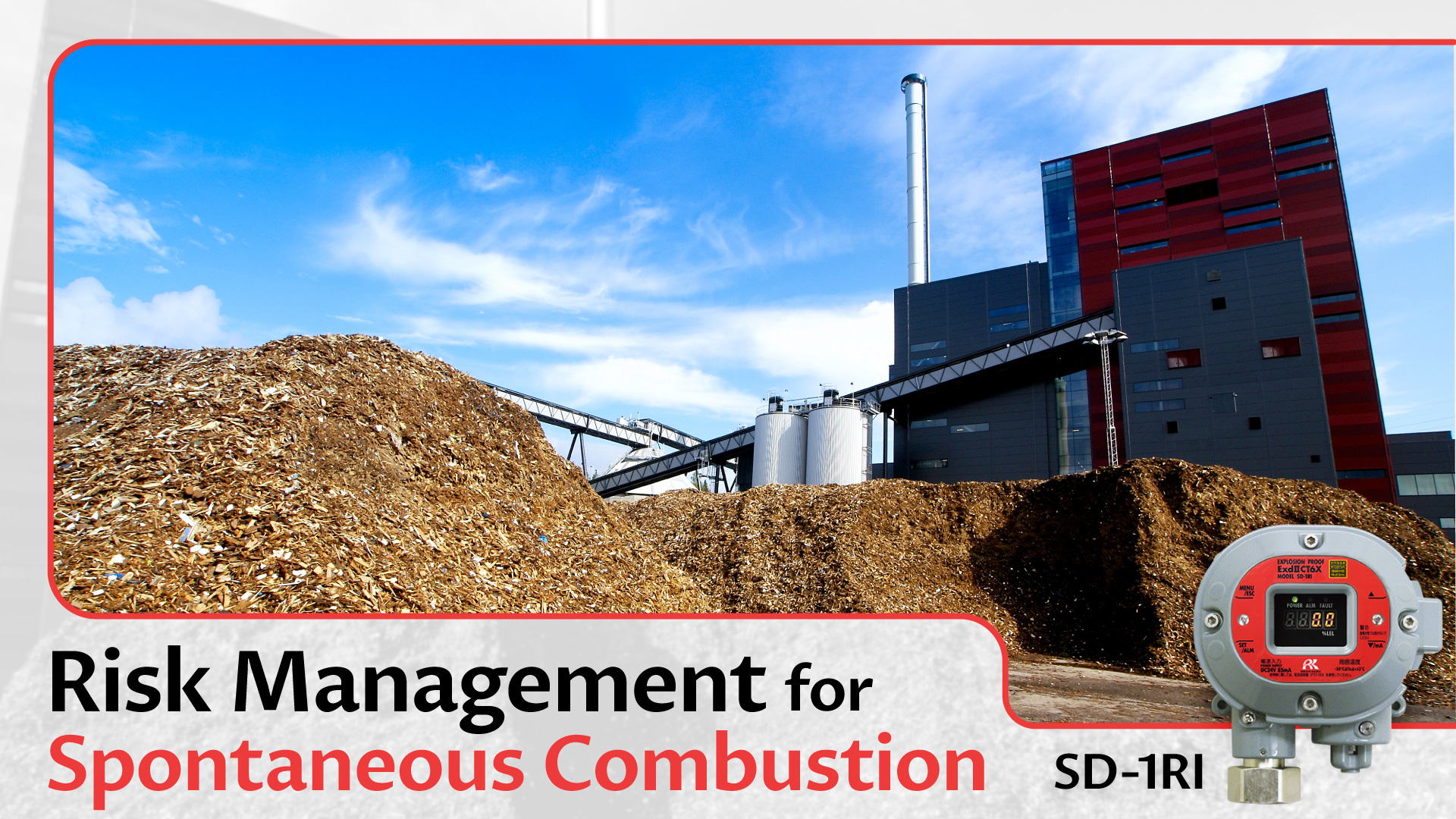
    This article examines how facilities address the risks of spontaneous combustion and the generation of combustible gases during fuel storage as a case study of safety measures in biomass power plants related to silo management.

    Biomass power plants typically store large quantities of wood pellets or wood chips in silos. Inside these enclosed silo structures, the fuel can undergo fermentation due to moisture and microbial activity, generating heat over time.

    As this heat accumulates, certain conditions such as fuel pile height and storage density can lead to spontaneous combustion. Another complication is that the fermentation process generates combustible gases such as methane (CH₄) as well as carbon monoxide (CO), which can indicate incomplete combustion. If combustible gases accumulate inside the silo, the risk extends beyond fire to include the possibility of a dust or gas explosion.

    Why Temperature Monitoring Alone Is Not Enough

    Many silos use thermocouples or other temperature sensors as part of their safety management systems. However, when dealing with biomass fuels such as wood pellets, temperature monitoring alone may not detect early-stage abnormalities.

    Wood pellets are porous materials with relatively low thermal conductivity. Even if localized heating begins deep within the fuel pile, the heat may not propagate quickly enough to reach temperature sensors located near the silo walls.

    By the time the sensors detect a temperature increase, carbonization inside the fuel pile may already be well underway.  To protect large silos effectively, facilities need to identify warning signs before significant temperature increases occur.

    Gas Monitoring as the Key to Early Detection

    Gas monitoring provides an effective way to detect early warning signs of fermentation and spontaneous combustion. While heat does not transfer easily, the generated gas flow up through the gaps between the pellets and rises relatively quickly into the space at the top of the silo. 

    By monitoring these gases, abnormal conditions can be detected much earlier than with temperature monitoring alone. One particularly important gas to monitor is methane (CH₄). Methane generated during fermentation can accumulate and create explosive conditions.

    Monitoring carbon monoxide (CO) is also essential because it can indicate early stages of combustion or thermal decomposition. In addition, oxygen (O₂) monitoring is important to protect workers from oxygen-deficient atmospheres during maintenance or inspection activities.

    Measuring in Tall, Dust-Filled Environment

    tank

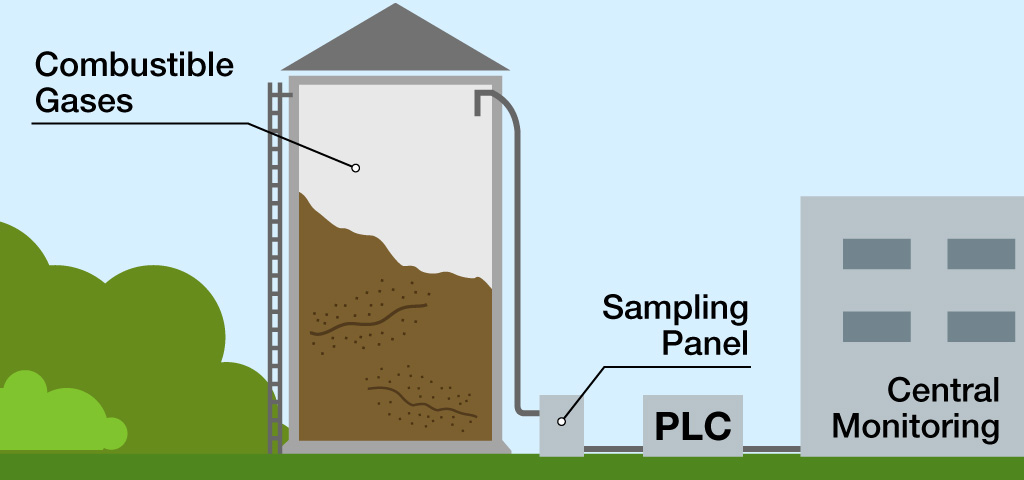
    Gas detection in large storage presents significant technical challenges. Silos can reach heights of several tens of meters, and gas sampling points are often located near the top. At the same time, the interior environment is extremely dusty. To address these challenges, RIKEN KEIKI provides a comprehensive solution based on sampling panels equipped with SD-1 series gas detectors.

    High-performance pumps enable ground-level installation
    By selecting high-capacity sampling pumps and placing sampling gas inlets at the top of the silo, the gas detector itself can be installed at ground level. This approach maintains fast response times even with long sampling lines. It also allows the detectors to be installed in safer locations, making maintenance easier and reducing operational workload.

    Integrated functionality in a sampling panel
    Installing a gas detector alone is not sufficient for reliable operation in dusty silo environments. Additional measures are required, including automatic compressed-air purging to prevent dust accumulation and drainage systems to manage condensation caused by temperature differences between indoor and outdoor air.

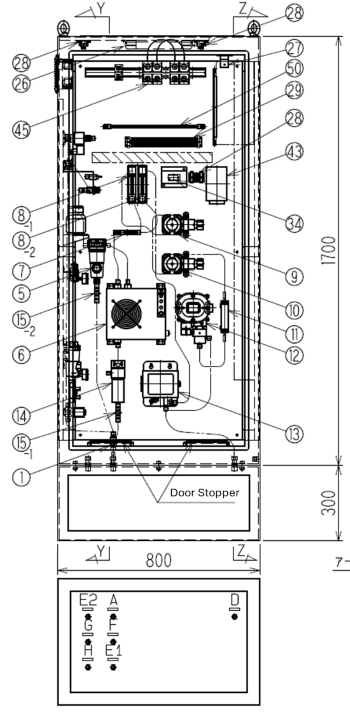
    These functions, together with the gas detectors, can be integrated into a single sampling panel. The panel can include:

    • Gas detectors

    • Automatic purge systems for dust protection

    • Condensation drainage systems

    • Temperature and humidity monitoring

    Integrating these components into one panel simplifies installation and reduces maintenance requirements. In addition, multiple gases can be measured through a single sampling line. This eliminates the need for separate pumps and piping for each gas type, helping to reduce installation costs.

    s_vol.10盤画像

    Example of the Sampling Panel
    *This is an excerpt from a document.

    Integration with plant monitoring and safety systems

    Measurement data can be transmitted in real time to central control rooms using industrial communication protocols. When abnormal conditions are detected, the system can automatically activate interlocks or fire suppression systems such as water spray equipment.

    Our Solution

    RIKEN KEIKI provides gas detection solutions by “Sample Panel” introduced in this blog, designed to operate reliably even in harsh industrial environments such as steel mills and waste facilities. 

    Click here for our blog on explosion prevention in waste facilities.

    SD-1 Series Gas Detectors
    The SD-1 series consists of  industrial gas detectors with explosion-proof construction and a wide selection of sensors tailored to different target gases. When installed as part of a sampling panel system, the SD-1 detectors can operate reliably even in environments with high dust levels and moisture.

    SD-3 Series
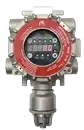
    For facilities that require a higher level of safety management, the SD-3 series offers a high-end, gas detection solution. The SD-3 features a robust stainless-steel enclosure designed for demanding industrial environments. Like the SD-1 series, it complies with international explosion protection standards including ATEX and IECEx. In addition, the SD-3 is certified to the SIL2 functional safety standard, enabling the development of highly reliable safety interlock systems for critical industrial applications.


    PRODUCTS

    Gas Detector with Signal Converter
    SD-3

    Product type

    Fixed Gas Detector

    Applications

    single/multi

    Single
    ← →
    inquire_slash

    Want to hear from an expert?

    Our team will be happy to help. Let’s find the right solution for you.

    Publications

    case_img-1
    See how companies across different industries are using our advanced gas detectors to prevent accidents, ensure compliance, and enhance safety. Exclusive case studies inside!

    case_img-1