Skip to content

Table of Contents

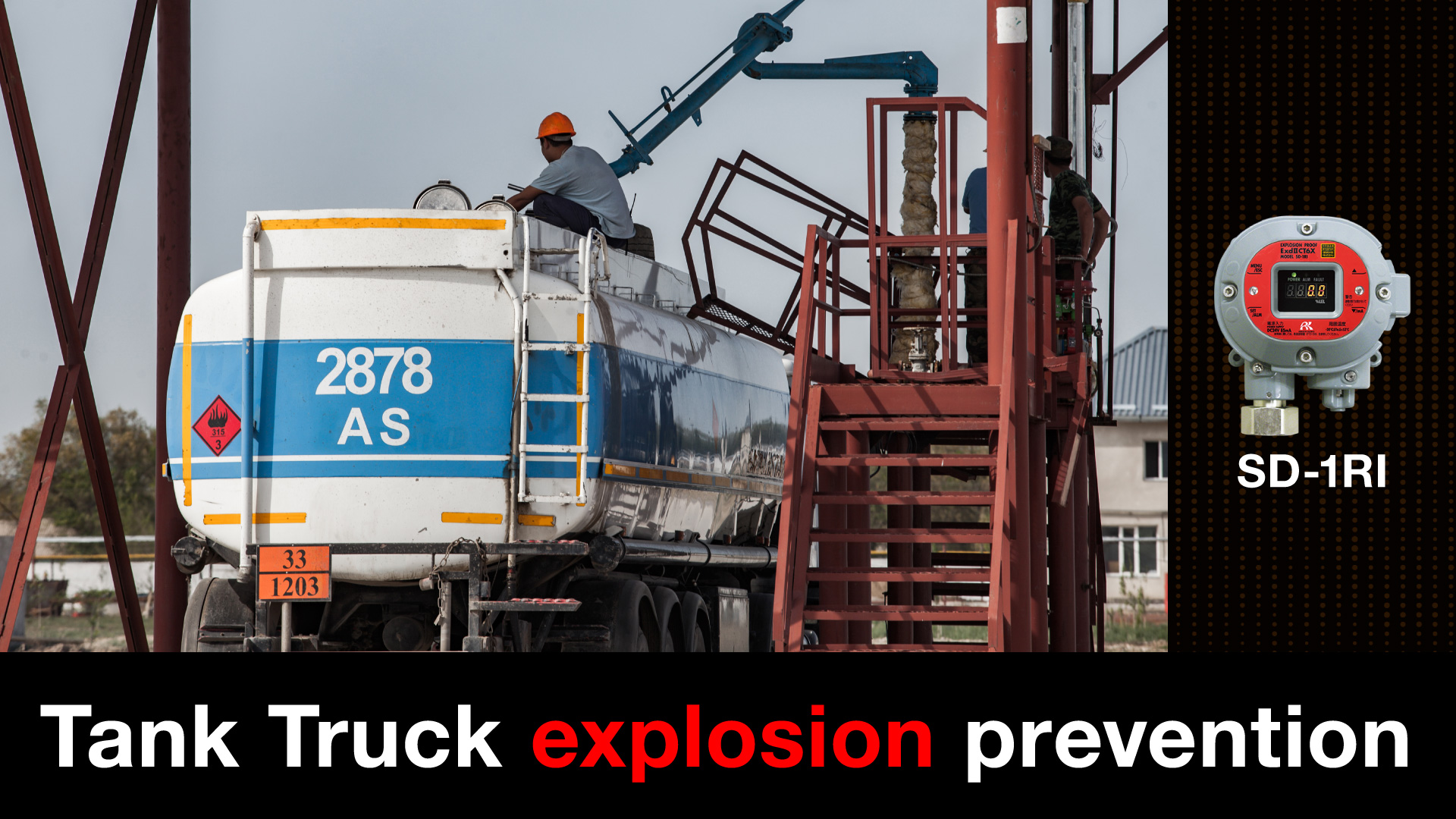
    The Hidden Explosion Risk During Fuel Loading

    Detecting high-concentration gases and reducing manpower in hazardous operations are common challenges at many industrial sites.
    This article examines a practical example: explosion prevention measures at facilities where fuel is loaded into tank trucks. It explains how gas detectors and sampling panels help improve both safety and operational efficiency.
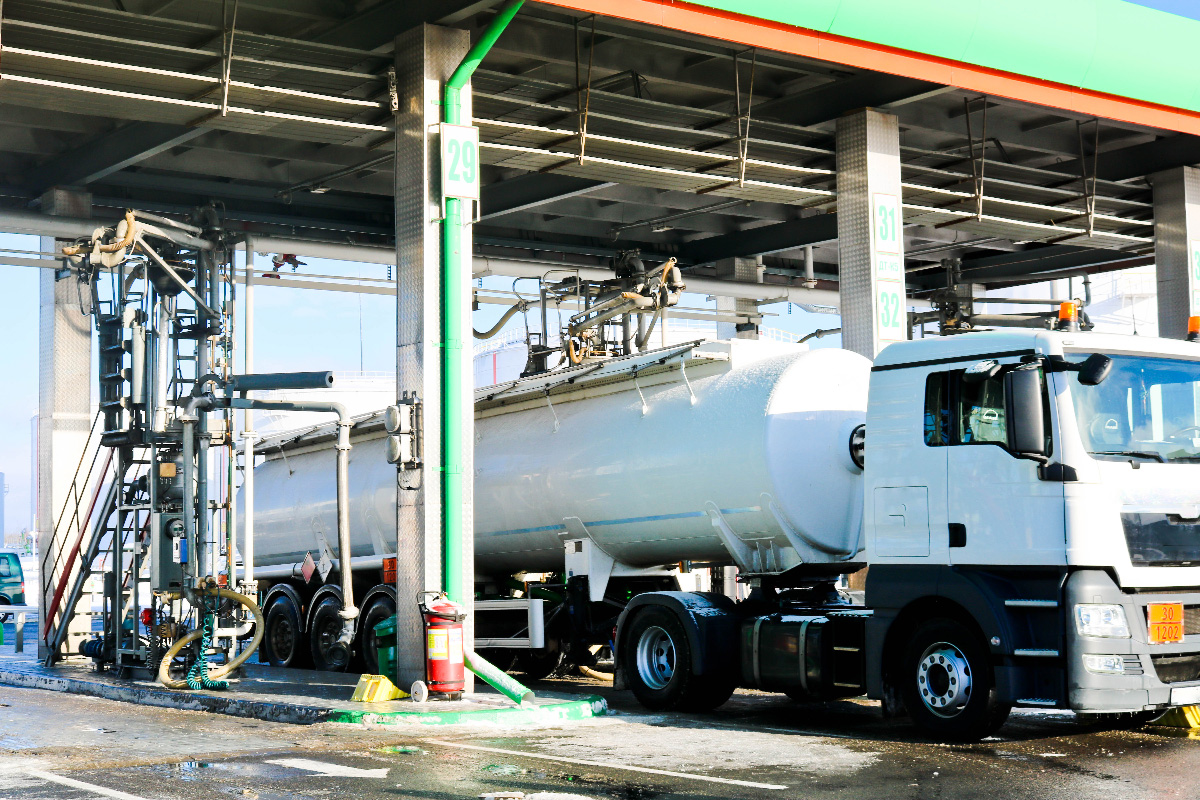
    Fuel loading operations for tank trucks always involve a risk of explosion. Inside the tank, dangerous conditions can occur due to the following factors.

    image001

    Residual vapor
     Inside the tank, vaporized fuel from previous shipments such as gasoline may remain. These vapors can accumulate inside the tank and create a potentially explosive atmosphere.

    Ignition caused by static electricity
    When fuel is loaded quickly, the movement of liquid can generate static electricity. This static charge can act as an ignition source and ignite the flammable vapors inside the tank.
    Gasoline vapor has an ignition energy of approximately 0.2 to 0.3 mJ, which is extremely small. Even a minor static discharge can trigger an explosion.
    When flammable vapors and an ignition source such as static electricity are present at the same time, there is a risk that an explosion could occur even shortly after loading begins.

    Challenges of Explosion Prevention Using Nitrogen Purging

    A common method used to prevent this explosion risk is nitrogen purging before loading.
    Nitrogen is introduced into the tank to reduce the oxygen concentration, making ignition less likely. At the same time, the nitrogen displaces flammable gases and lowers their concentration so that explosive conditions cannot form.

    However, a major issue at many sites is determining how long nitrogen should be supplied.

    Unclear completion timing
    The time required for purging varies depending on the size of the tank and the amount of residual gas. Managing the process based only on a fixed time, such as running nitrogen for a specified number of minutes, can lead to two problems.

    One is insufficient purging, which creates a safety risk. The other is excessive nitrogen consumption, which increases time and cost.

    Visualizing Nitrogen Purging with Real-Time Gas Detection

    To remove the uncertainty associated with nitrogen purging, it is effective to measure the gas concentration inside the tank in real time using a gas detector. This makes the condition inside the tank visible.
    In practice, nitrogen continues to flow until the gas concentration falls below the Lower Explosive Limit (LEL).

    At this point, the choice of detection
    method becomes important. Instead of the commonly used catalytic combustion type, an infrared detection method should be used.

    Limitations of catalytic combustion sensors
    Typical catalytic combustion sensors measure gas concentration by burning gas on a catalyst.

    However, when these sensors are used in high-concentration gas environments such as inside tanks, excessive combustion reactions can damage the sensor element. This can lead to wire breakage or reduced sensitivity.

    Another limitation is that catalytic sensors require oxygen for the combustion reaction. When nitrogen purging removes oxygen from the environment, measurement becomes impossible.

    Advantages of infrared detection
    Infrared (NDIR) sensors measure gas concentration by detecting the absorption of infrared light. This method offers several advantages.

    Stable operation in high concentrations
    Exposure to high concentrations of gas does not damage the sensor, allowing stable operation over long periods.

    Measurement without oxygen
    Accurate gas measurement is possible even in an environment that contains 100 percent nitrogen and no oxygen.For these reasons, infrared gas detectors are well suited for monitoring fuel loading operations for tank trucks.

    Systemizing Tank Truck Loading with Gas Detection

    Visualizing the nitrogen purging process with an infrared gas detector improves safety and also enables automation and reduced operator workload in the loading process.

    By linking the detector's measurement signals with a control system, the process can be operated efficiently without relying on manual judgment by operators.

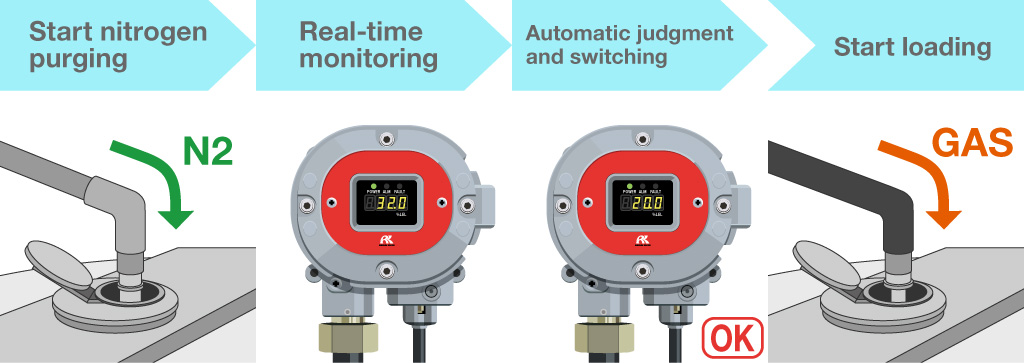
    Example of an automated loading process

    • Start nitrogen purging

      Nitrogen injection begins after the loading arm is connected.

    • Real-time monitoring

      The gas detector continuously monitors the gas concentration inside the tank.

    • Automatic judgment and switching

      When the detector confirms that the gas concentration has fallen below the safety threshold, the system sends a signal. Nitrogen injection stops automatically and the system switches to the fuel loading line.

    • Start loading

      Fuel loading begins once safe conditions are confirmed.

      This approach eliminates the need for operators to manage timing or valve operations manually. It helps reduce workload while maintaining a high level of safety.

    8_0005b

    Solving On-Site Challenges with a Sampling Panel

    When introducing a gas detection system, RIKEN KEIKI can provide not only the detector itself but also an integrated sampling panel designed to meet the needs of the site.

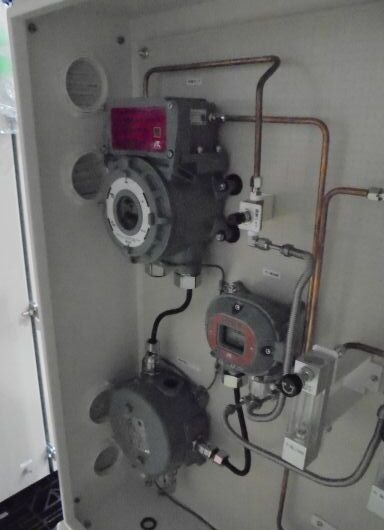
    A sampling panel houses the sampling equipment, such as pumps, filters, and flow meters, together with the gas detector in a single enclosure.

    This configuration provides several benefits.

    Because the sampling equipment is preassembled inside the panel, there is no need to assemble each component individually at the site. This significantly reduces piping and wiring work during installation.

    Flexible installation
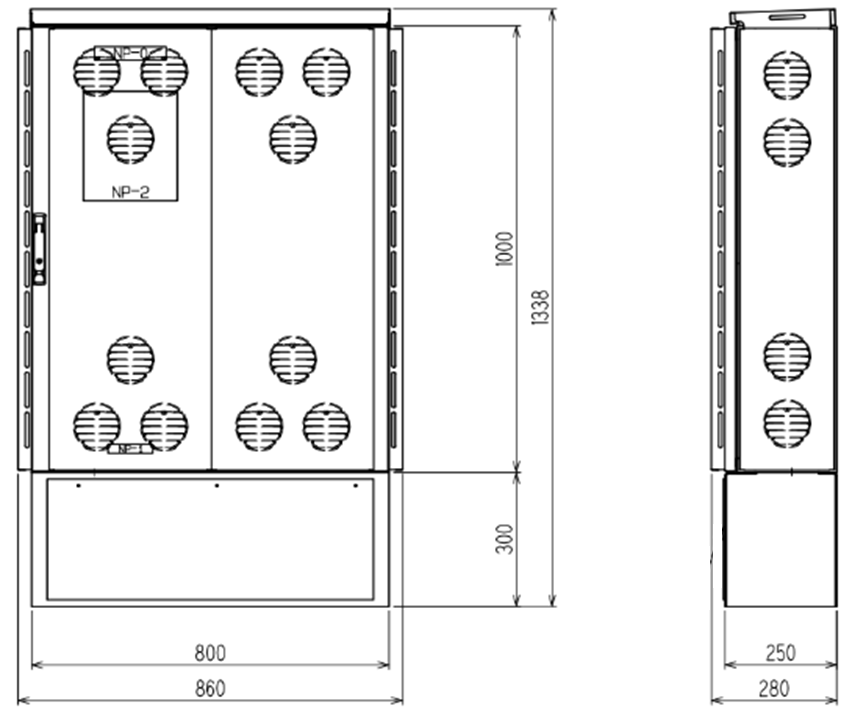
    If there is no space available for wall-mounted equipment, the system can be designed as a self-standing panel. This allows installation in limited areas such as around loading racks.

    Customization options
    Standard measurements in the range of 0 to 100 percent LEL generally do not require dilution.
    However, if there is a need to monitor concentration levels above the LEL, a nitrogen dilution mechanism can be integrated into the panel as part of a customized configuration.

    s_DSC01319-1
    vol.8盤画像

    Example of the Sampling Panel
    *This is an excerpt from a document.

    Our Solutions

    RIKEN KEIKI provides solutions that support explosion prevention and automation in fuel loading operations.
    In addition to supplying gas detectors, we support system implementation through sampling panels designed to address on-site challenges.

    Sampling panels designed to solve on-site challenges
    We provide integrated systems that combine sampling equipment such as pumps and filters with gas detectors in a single panel enclosure.

    By consolidating the equipment into one panel, piping and wiring work at the site can be significantly reduced. This allows the system to be installed quickly and efficiently.

    Infrared Gas Detector SD-1DRI
    The SD-1DRI is a gas detector designed for monitoring fuel loading operations that involve nitrogen purging.
    It uses an infrared absorption detection method, which allows accurate measurement regardless of oxygen concentration.
    The detector supports suction-type sampling. This allows real-time monitoring of the tank atmosphere through vapor return lines or dedicated sampling ports.
    Because the system continuously monitors gas concentration, it allows the transition from nitrogen purging to fuel loading to be automated. This contributes significantly to reduced operator workload at the site.
    The SD-1DRI is certified for explosion protection in multiple countries and complies with international safety standards.

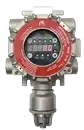
    High-performance model for advanced requirements: Infrared Gas Detector SD-3
    In addition to the SD-1 series, RIKEN KEIKI offers the next-generation SD-3 for applications that require higher functionality.
    Compared with the SD-1, the SD-3 provides enhanced capabilities and is certified to comply with the international functional safety standard SIL (Safety Integrity Level).
    This certification helps ensure a higher level of safety performance in plant instrumentation systems.
    Like the SD-1, the SD-3 holds multiple international explosion-proof certifications including ATEX and IECEx. This makes it suitable for facilities that require advanced safety management and system integration.

    PRODUCTS

    Gas Detector with Signal Converter
    SD-3

    Product type

    Fixed Gas Detector

    Applications

    single/multi

    Single
    ← →
    inquire_slash

    Want to hear from an expert?

    Our team will be happy to help. Let’s find the right solution for you.

    Publications

    case_img-1
    See how companies across different industries are using our advanced gas detectors to prevent accidents, ensure compliance, and enhance safety. Exclusive case studies inside!

    case_img-1