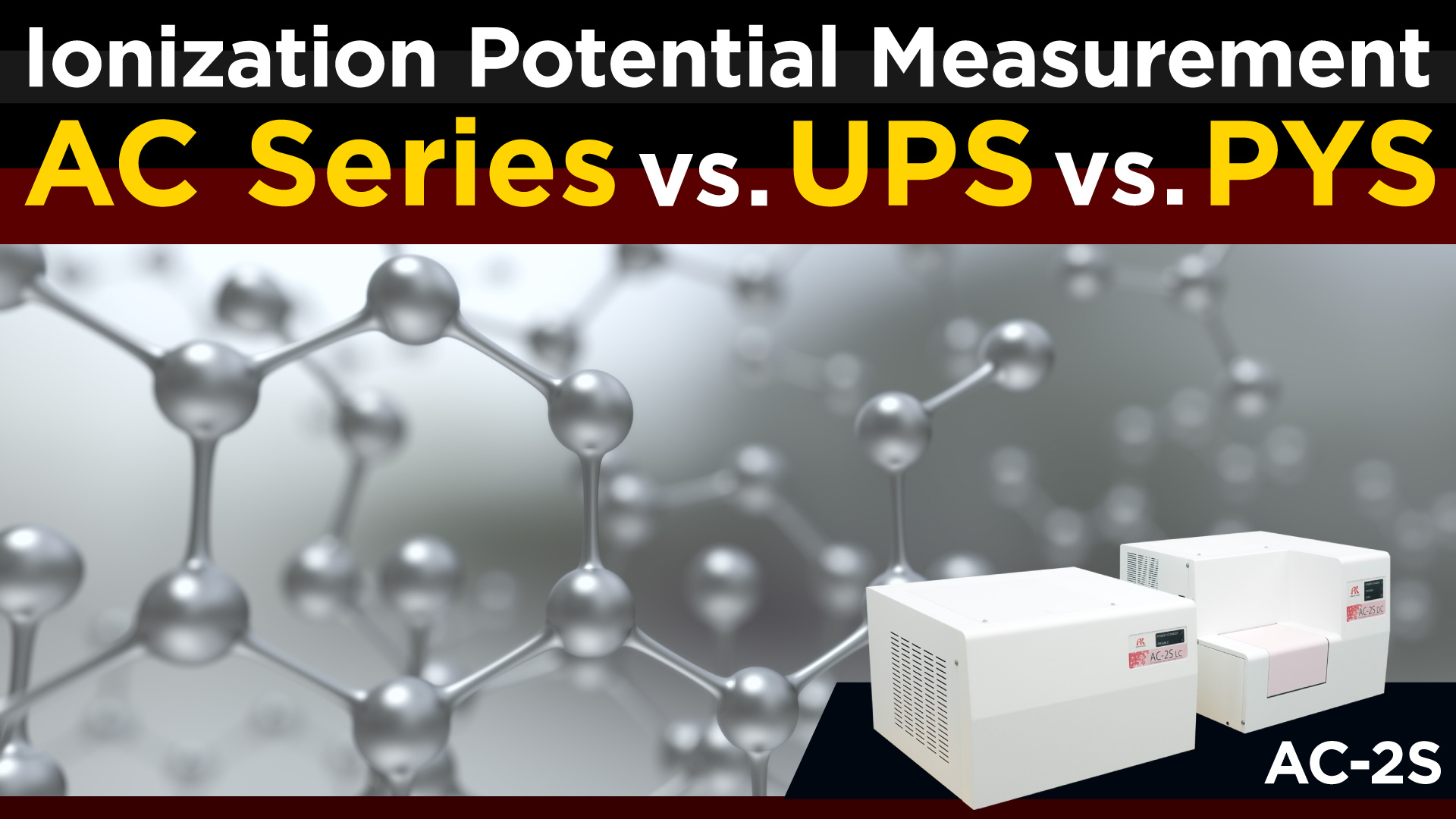
What Is Ionization Potential Measurement for Research and Mass Production? Comparing the AC Series, UPS, and Current-Mode PYS
Table of Contents
The Importance and Challenges of Ionization Potential in Organic Semiconductors
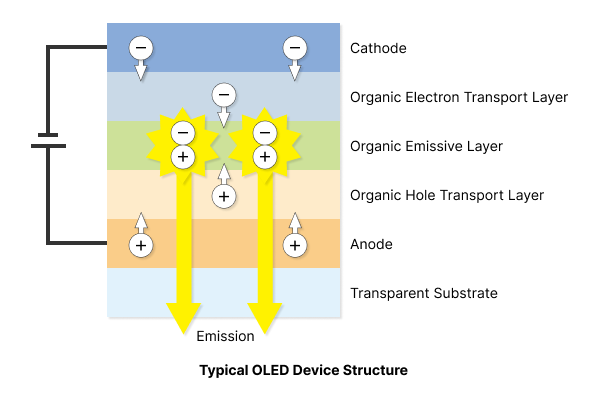
Organic semiconductors are organic materials that exhibit semiconductor properties. In recent years, they have attracted significant attention due to rapid advances in material development and device applications. Compared with inorganic semiconductors such as silicon, organic semiconductors offer advantages including lightweight construction and mechanical flexibility, making them promising for a wide range of applications such as OLEDs, perovskite solar cells, organic transistors, and wearable devices.
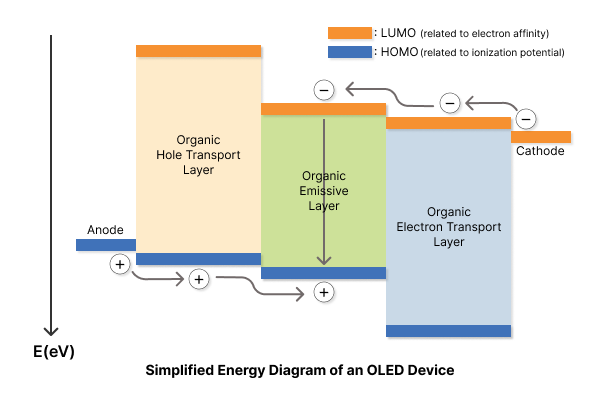
The performance of these devices depends not only on the intrinsic properties of the materials themselves, but also on the alignment of energy levels at the interface between the electrode and the material. As a result, accurately and efficiently characterizing the electronic states of materials is essential for both research and mass production, from new material selection to quality control and process stabilization in mass production.
Among the key parameters, ionization potential, which corresponds to the HOMO level of a material, is widely used as a fundamental indicator of hole injection efficiency. It is therefore a critical parameter in both R&D and quality control.
Challenges in Measuring Ionization Potential for Organic Semiconductors
Both research and manufacturing environments face unique challenges related to ionization potential measurement. In research and development, rapid and accurate evaluation of ionization potential is essential for discovering new materials and understanding interface properties. However, several practical limitations remain:
-
Long Measurement Times
Efficient screening of large numbers of candidate materials requires fast ionization potential measurement. However, methods such as UPS typically require significant measurement time.
-
Limitations of Vacuum Environments
Many measurement techniques require vacuum conditions, increasing measurement time as well as operational complexity and running costs.
In manufacturing environments, fluctuations in surface conditions caused by material lot variations or processing history can directly affect device performance. This creates a need for more direct quality control methods. Current challenges include:
-
Need for Lot-by-Lot Quality Control
Organic semiconductor characteristics can vary between material lots, making lot-specific quality control essential.
-
Reliance on Indirect Quality Indicators
Conventional ionization potential measurement methods such as UPS often require several hours per measurement, making them impractical for production-line quality control. As a result, manufacturers often rely on indirect indicators such as impurity analysis or film thickness measurements.
-
Sample Degradation
Some ionization potential measurement methods, including current-mode PYS, can cause significant sample damage, making repeated measurements difficult.
Learn more about the importance of ionization potential measurement in manufacturing environments.
Although the specific challenges differ between research and manufacturing, both share a common bottleneck: the inability to measure ionization potential quickly enough. This delay impacts material evaluation and decision-making, reducing R&D efficiency and forcing production sites to rely on indirect quality control methods.
Selecting the appropriate ionization potential measurement technique is therefore critical for both research and mass production processes.
Comparison of Ionization Potential Measurement Methods
|
Method |
AC Series |
UPS |
Current-Mode PYS |
|
Sensitivity |
★★★ |
★★★ |
★ |
|
Track Record and Reliability |
★★★ |
★★★ |
★ |
|
Low Sample Damage |
★★★ |
★★ |
★ |
|
Flexibility for Sample Shapes |
★★★ |
★★ |
★ |
|
Simple Measurement Procedure |
★★★ |
★ |
★★ |
|
Fast Measurement |
★★★ |
★ |
★★ |
|
Low Initial and Operating Costs |
★★★ |
★ |
★★ |
|
Energy Range |
★ |
★★★ |
★★ |
|
Measurement Environment Flexibility |
★ |
★ |
★★ |
|
Research Suitability |
★★★ |
★★★ |
★ |
|
Mass Production Suitability |
★★★ |
★ |
★ |
AC Series
The AC Series determines ionization potential and work function by irradiating a sample with ultraviolet light and counting photoelectrons emitted through the photoelectric effect. One of its key advantages is the ability to perform highly sensitive ionization potential measurements in air in about 5 minutes.
Research Suitability: ★★★
-
Short Measurement Time
Measurements can be completed in about 5 minutes in air, enabling efficient material screening.
-
Extensive Track Record and Reliability
The AC Series has been widely used in applications including perovskite solar cell research and has established strong credibility in organic semiconductor evaluation.
-
Low Initial and Operating Costs
In addition to its relatively low equipment cost, the system does not require vacuum infrastructure, significantly reducing operating expenses.
-
Energy Range Limitations
Because oxygen in air absorbs high-energy ultraviolet light, the measurable energy range is narrower compared with some other techniques.
Mass Production Suitability: ★★★
-
Proven Use in Mass Production Facilities
The AC Series has been widely adopted in mass production facilities for organic electronic materials and devices.
-
Low Sample Damage and Repeatable Measurement
Its high sensitivity enables low-power, short-duration measurements, minimizing sample damage and allowing repeated testing.
-
Simple Operation
Dedicated software enables semi-automated startup and measurement procedures, making operation straightforward for a wide range of users. The system is also CE certified.
-
Fast Measurement
With measurement times of about 5 minutes in air, the system can be integrated into quality control workflows in mass production.
-
Low Initial/Operating Costs
Because no vacuum equipment is required, both initial investment and operating costs can be reduced.
UPS
UPS irradiates a sample with ultraviolet light and separates emitted photoelectrons according to their kinetic energy before detection. Measurements are performed under ultra-high vacuum conditions, enabling electronic state analysis across a wide energy range. UPS is a long-established and highly reliable technique.
Research Suitability: ★★★
-
High-Sensitivity Measurement
Using a channeltron detector, UPS counts photoelectrons individually under vacuum conditions, enabling highly sensitive measurements.
-
Extensive Research History
UPS has a long history as a photoelectron spectroscopy technique and is widely recognized as a reliable analytical method.
-
Wide Energy Range
The use of 21.2 eV excitation light enables analysis across a broad energy range.
-
Restrictions on Sample Form
Because measurements are performed under vacuum, handling powder samples can be challenging, and liquid samples cannot be measured.
-
High Cost
UPS systems are expensive and require ultra-high vacuum infrastructure, resulting in high initial and operating costs.
Mass Production Suitability: ★
-
Significant Sample Damage
The method requires high-energy ultraviolet irradiation of the sample surface, which can damage samples and makes repeated measurements unsuitable for mass production processes.
-
Specialized Expertise Required
Operation, maintenance, and data analysis require specialized knowledge of vacuum systems and photoelectron spectroscopy. Dedicated operators are typically necessary.
-
Long Measurement Time
Preparation of the vacuum environment and the measurement process itself can take several hours, making UPS impractical for quality control in mass production.
Current-Mode PYS
Like the AC Series, current-mode PYS irradiates the sample with light and utilizes photoelectrons generated by the photoelectric effect. However, instead of directly detecting emitted electrons, the method measures the external current flowing into the sample to replenish emitted electrons. Measurements can be performed in vacuum, air, or nitrogen environments.
Research Suitability: ★
-
Flexible Measurement Environments
Measurements can be conducted in vacuum, air, or nitrogen environments, allowing comparison of ionization potential under different conditions.
-
Low Initial and Operating Costs
The system has relatively low equipment and operating costs because vacuum equipment is not always required.
-
Wide Energy Range in Nitrogen or Vacuum
Measurements up to approximately 10 eV are possible in nitrogen or vacuum environments. In air, measurements are typically limited to around 6.2 eV.
-
Low Sensitivity
Because the technique measures current flowing into the sample using an electrometer, the detection limit is typically around 1 fA (10^-15 A). A current of 1 fA corresponds to approximately 6,240 electrons per second, making the method significantly less sensitive than techniques that count individual electrons directly.
-
Limited Track Record
Compared with the AC Series and UPS, current-mode PYS has a more limited track record.
-
Restrictions on Sample Shape
Because the method measures current flow into the sample, the sample must be electrically conductive. Powder samples are generally difficult to measure.
Mass Production Suitability: ★
-
Faster Than UPS
Measurements can be completed more quickly than with UPS.
-
Potential Sample Damage
Due to lower sensitivity, higher light intensity is often required to obtain sufficient signal levels, increasing the risk of UV-induced sample damage.
-
Low Sensitivity
Because of electrometer detection limits, approximately 10^6 to 10^7 electrons are required for detection, making weak electron signals difficult to measure.
-
Lower Operational Efficiency
Electrodes must be attached to samples for current measurement. In addition, measurements under nitrogen or vacuum conditions increase operational workload compared with measurements in air.
While UPS is primarily suited for research applications and current-mode PYS offers flexible measurement environments but has sensitivity limitations, the AC Series stands out because it can be effectively used in both research and mass production environments.

Why the AC Series Is Used in Both Research and Mass Production
In manufacturing environments, the ability to perform fast and highly reproducible measurements allows the system to be used as a quality control indicator for quickly identifying lot-to-lot variations.
Another major advantage is that the same measurement method can be used consistently across both research and mass production. This enables evaluation data generated during R&D to be transferred directly into mass production processes, simplifying technology transfer and improving process continuity.
The ability to satisfy the demands of both research and mass production processes while providing a unified evaluation standard is one of the primary reasons the AC Series has been widely adopted across the industry.
AC Series Product Information
Below are representative models in the AC Series lineup. For more detailed information, please visit the product page.
AC-3
(Model supporting measurements up to 7.0 eV)
The AC-3 enables measurements in air up to 7.0 eV.
It is well suited for materials with high work function or high ionization potential values.
AC-2S Series
(Basic and Pro Models)
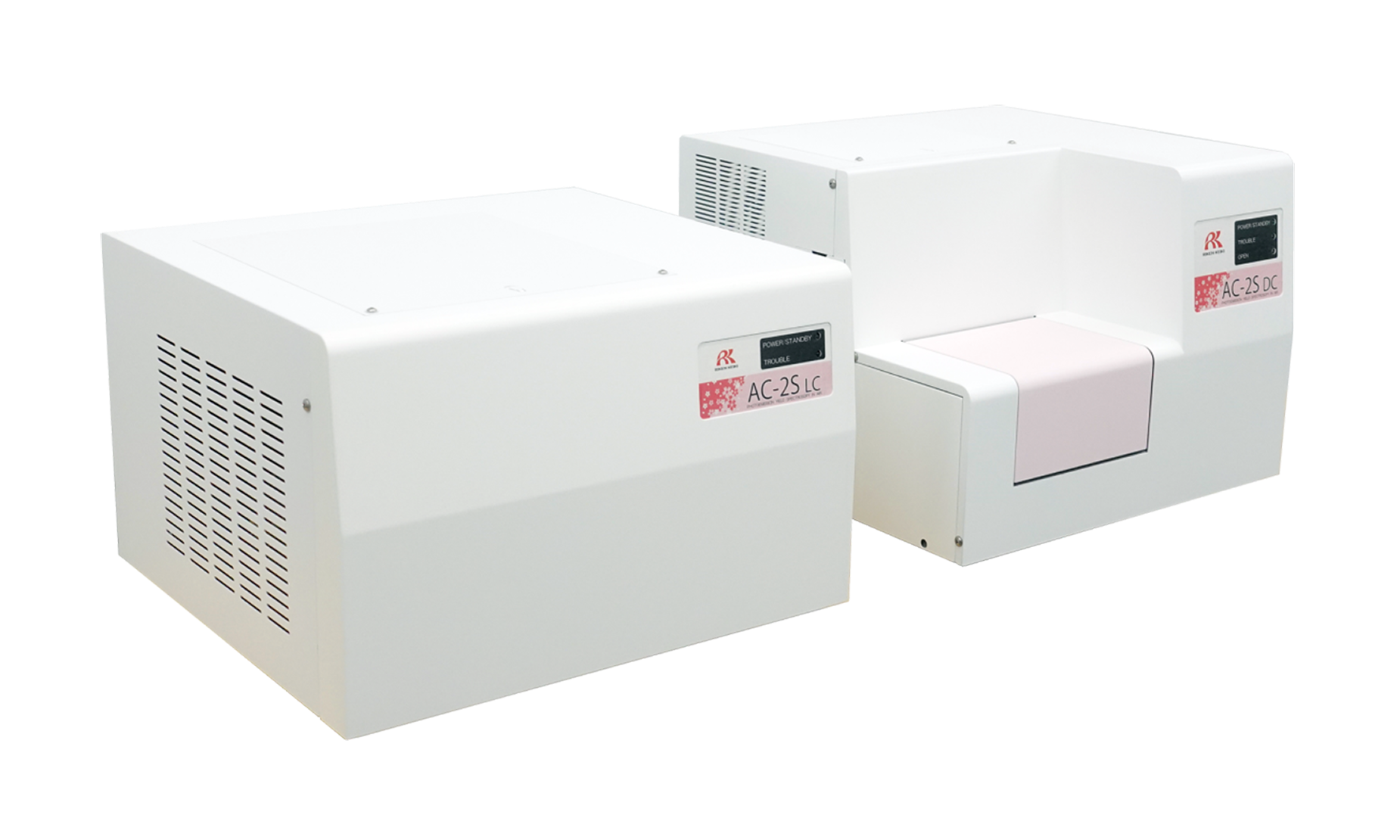
The AC-2S Series retains the core functionality of the AC Series while offering a more compact and lightweight design.
AC-2S
The standard model supports measurements in air and rapid measurement functions, as well as multipoint and repeated measurements, helping improve operational efficiency.
AC-2S Proα / Proβ
These upgraded models are optimized for specific applications, offering enhanced performance for material development and device development applications.
PRODUCTS
Product type |
Surface Analyzer |
|---|---|
Applications |
|
single/multi |
Want to hear from an expert?
You may also be
interested in
What Is Ionization Potential Measurement for Research and Mass Production? Comparing the AC Series, UPS, and Current-Mode PYS
Compare AC Series, UPS, and current-mode PYS for ionization potential measurement in organic semiconductors, from research to mass production.
How to Improve Quality Control Precision in the Mass Production of Organic Semiconductors: Introduction of Direct Energy-Level Evaluation
Gas detection systems prevent explosions in waste facility crushers by detecting combustible gases, ensuring worker safety, and maintaining operational stability through advanced technology and preventive strategies.
Publications